Saturday, February 16, 2013

Guys are not going to want to f**k her


 Of all the things I've posted over the last eight years, this has been my most requested.  And since we're right in the middle of pilot casting season, I thought I'd re-post it with sincere admiration to those gallant actors and actresses trying to beat the incredible odds. 
 
My heart always goes out to actors during pilot season (which this is). Here’s how hard it is to become a cast member of a hit series:

When a writer/producer gets the good/bad news that his pilot has been greenlighted the first thing he does is hire a casting director and together they prepare a list of possible worthy candidates for each part. They then meet with the network casting person. She responds to your list. “No, no, hate him, uch, no, no, no, uch, no.” If one of those “uchs” is you you’re dead.

The network casting person will then present her list. One name sticks out. The writer/producer tells her he won’t cast this guy because he killed his grandmother. The network casting maven says, “Well, he didn’t kill a member of your immediate family. Read him anyway.” Basically writer/producers are expected to pursue the names on her list. If you haven’t already been eliminated you’re now at a huge disadvantage if you’re going up against one of these golden names. (By the way, it is very easy to go from this list one year to "uch" the next. Beware.)

Now comes the reading process. Out of all the pilots there may only be a few roles you’re right for. There are also a few more you’re not right for but you apply anyway. You can play Asian if you have to, no sweat.

Your agent submits your name. The casting director may not think you’re right or not be a fan and you’re dead. Assuming you’re over that hurdle you’re invited in to read. There usually are a hundred or more actors reading for every role. Great odds, huh? In these initial sessions you’re usually reading for a committee – the writer/producers, the pod producers, a couple of studio representatives. All you need is one of them to not like you and you’re toast. And by “not like” that could mean “too tall”, “good but we’ve seen him in things”, “he was my waiter last week at the Daily Grill and was terrible”, and “guys are not going to want to fuck her”.

Now there’s a new wrinkle. Networks insist the auditions be recorded and sent to them for perusal. Let’s say you’re reading for a part you’re not right for. Or you just didn’t do well. Not only are you dead but now the network gets to see your bad audition and you’re now on the “no, uch” list for other projects. So for the seven pilots you’re going up for, that one audition just cost you four of them.

Ready to go back to Michigan and teach 5th grade yet?

You make the cut. You get a call-back. By that time you’re not sure what you did that they liked so much? Can you do it again, whatever it is?

You’re on a roll. You kill at the call-back. You’re now a finalist. Your agent makes a deal contingent on studio and network approval.

You read for the studio. Another committee, mostly made up of non-creative types. All it takes is one to hate you.

They don’t hate you. You move on to the network test. You and four other candidates are led into a screening room one at a time where you audition for the network president (and a committee but when the network prez is there their opinions mean nothing).

Talk about pressure. Let’s say you were up for the role of “Rachel” in this pilot called FRIENDS. How different would your life be depending on whether or not you got that part?

You can hit it out of the park and still not get the part. The network president may be partial to a name on his golden list. He may have no ability to judge talent. He may not want to fuck you.

By some miracle he likes you. But there’s a hang-up. He still wants a bigger name. So you hold your breath while the producers make an eleventh hour plea to Paula Marshall. She passes. They settle for … I mean “cast” you.

You’re in, right? Not so fast.

During the week of production there are network table readings and runthroughs. You could get fired at any one of them. And it’s not necessarily your fault. The material could be awful, the director gave you bad direction, they never really wanted you in the first place.

But you survive the week of production and film the pilot. Now comes research and test screenings. I’ve observed these focus groups. One woman says she hates you. Why? She can’t believe you wore those shoes. (That’s a true story.) The network says if the show goes forward you’re to be replaced.

That’s IF she show goes forward. You could give the performance of a lifetime but if the show doesn’t get picked up you’re dead. And again, there are sooooo many factors that go into that decision that have nothing to do with you... although your life depends on it.

There is a God. The show gets picked up. You’ve tested okay. You’re home free now.

Uh, no.

There may be an actor from a pilot that didn’t get picked up that the network really loves. They want to make a place for him. That could well be your role. Again, you’re dead.

But that doesn’t happen. Not in this case. You get on the air. I’ve seen actors replaced after three or four episodes (although it’s fairly rare) but chances are you’re safe…

IF the show becomes a hit. How many shows get canceled? About 90%.

You can understand why my heart goes out to actors. I just can’t imagine facing that level of constant rejection. So congratulations to all the actors who do make it. Savor each and every moment. Go to the parties. Be in the parades. Do the photo shoots. Fly in the company jet. You’ve won the lottery. Also, print this out and read it in three years when you start wondering if the show is holding you back.

Good luck this pilot season, thesps!

Friday, February 15, 2013

How we determined credit

Got some Friday Questions & Answers for ya.

Chris starts us off:

Does WGA have any rules about who goes first on a writing team credit? Peter Tolan and Denis Leary kept switching theirs on the "created by" credit on Rescue Me. Seemed it was a fair way to handle the issue.

How did you guys decide?

There are no guild rules as to who in a writing team gets top billing. The team has to fight it out themselves.

We went in alphabetical order (but just couldn’t spell).

Seriously, I don’t know why I got top billing originally. Maybe it’s because I was the one who called David about teaming up.

There are some teams that switch off every year. I made that offer to David years ago, but he said “the only people who read these are relatives and they now know where to look, so let’s just keep things as is.”

And after awhile you’re just known as a single entity. “What about Levine-Isaacs for that project?” etc.

And then there’s the famous story about one member of a writing team walking alone at a studio and a passing executive saying, “Hello, boys.”

Camille Couasse has a question from across the sea:

I’m a French TV screenwriter who’d like to write for American TV, but I’m not sure where to start. For a foreigner like me, isn’t it simpler (Visa wise) to write a feature and try and sell it, rather than write a spec script and hoped to be hired on a show (over more legitimate Americans)?

So, my question is: As a foreigner, if I want to make it in the US, should I write for TV or for the film industry? What’s my best shot? And also, If I sell one feature, isn’t easier to work in TV?

I’m not an agent, but I would assume you’d have better luck writing a screenplay. Plus, you could set it in France if you’d like and have better command of the world.

And I imagine if you wrote a spec for an existing TV series there would be some producers who – unfairly – might just assume you don’t know the show because you’re not here.

The lines have been blurred considerably between television and feature writers. It used to be if you were in TV you had a tough time cracking the feature market. And feature writers considered television “slumming.” Now they’re all hopping back and forth between the two.

But if your spec screenplay sells and you suddenly have a feature career, ride that wave all the way to the shore.

The Comic Scholar has a question along those same lines:

Do writers tend to stick to one type of show or another? For example, is it common/unheard of for a writer to work on sitcoms and dramatic hour-longs?

There’s a lot more crossover now. This really began about seven or eight years ago when comedies seemed to dry up. (Now they’re back, thank God.) But I know a number of half-hour writers who have done hour shows. Phoef Sutton, Janet Leahy, Steve Nathan, Mike Saltzman, Dan O’Shannon, and of course Matthew Weiner to name a few.

Going the other way, it happens as well. Ryan Murphy leaps to mind with NEW NORMAL. And Aaron Sorkin has tried his hand at half-hours with SPORTSNIGHT.

And now that comedies and dramas are blending it really depends more on a writer’s sensibility than track record. I certainly wouldn’t classify GIRLS strictly as a comedy. And there are more laughs in JUSTIFIED than 90% of today’s sitcoms.

Helena queries:

The formatting rules for a script are clear, but I rarely read anything about how to format a show's bible. Some scriptwriting contests for instance suggest that other information, like future episodes, is sent along with the pilot. So what exactly should a bible look like and contain?

There is no standard format. Each show seems to have its own. And the content varies as well. The show bible generally is an account of past episodes. I’ve been on some shows where that means just a detailed synopsis of the episode. Other shows have sections for each character that grows as the character develops.

It mostly depends on who is assigned to maintain the bible. If it’s a writers’ assistant they usually are quite up to date. If it’s a story editor or staff writer chances are months will go by before the bible is updated.

Honestly though, the need for show bibles is much less today because of the internet. You can easily find synopses of every episode. There are probably character sections as well. Are these online bibles accurate? Yeah, I guess, sort of. There might be some inaccuracies but so what? Bibles are just used for reference anyway.

What’s your question? Leave it in the comments section. As always, many thanks.

Thursday, February 14, 2013

Happy Valentine's Day

Not my favorite holiday.  My big problem with Valentine’s Day is that it’s also my birthday. Try going out to a nice celebration dinner when every restaurant is packed, all the prices are jacked way up, and everyone is trying so hard to create a “romantic atmosphere” that when their date isn’t looking they’re popping Lexapros like Tic Tacs.

Still, not to be a cynic I would like to offer an explanation for what love really is. It comes from that font of romance -- an episode of TAXI (written by Ken Estin).

Louie is trying to win back his girlfriend, Zena. He asks if she loves him. She says she doesn’t know what love is. He tells her she’s in luck because he does. And he’s the only person alive who can say that. He’s read what everyone else says love is and they’re always wrong. She finally asks him what it is, and Louie says:

“Love is the end of happiness!

The end. Because one day all a guy’s got to do to be happy is to watch the Mets. The next day you gotta have Zena in the room watching the Mets with you. You don’t know why. They’re the same Mets, it’s the same room…but you gotta have Zena there.”

That to me expresses more heartfelt love than any bouquet or bling or blowout dinner. Maybe you should change your plans and just get together in her apartment. Especially since I still don't have dinner reservations and would prefer not celebrating my birthday at Taco Bell.

Thank you and happy Valentine’s Day.

Wednesday, February 13, 2013

Fox announces "ShortComs"

Fox has announced an experimental series for the summer called “Shortcoms.” These will be hour shows split into four segments. Each segment will be a multi-camera sitcom starring and written by a stand-up comic. Fox claims they will give the comics great freedom.

First off, I applaud any attempt to do comedy, especially an innovative one.

But I have some concerns:

Last year Fox picked up no multi-camera shows. The distinct impression was that they thought single-camera comedy was the only way to go and that multi-cams were too old fashioned. Now they’re saying they’ve always loved multi-cam shows?

On the surface giving these comics free reign sounds great in theory but are they really going to allow them that much leeway? Networks today are incredibly hands-on. Story areas, outlines, and scripts all must be approved.

And if they are going to give these comics freedom why don’t they do that with real writers? Especially since real writers know what they’re doing and comics are just feeling their way around the form.

I can't think of another industry where experience is considered a detriment. 

Lastly, this sounds like a transparent attempt to find the next LOUIE. But Louis C.K. is special and has a distinct vision. Will these 6-9 comics have true unique voices?   I listen to the comedy channels on Sirius/XM and I'd be hard-pressed to find nine truly original performers.  Most of them trot out an endless parade of bad tech help, women are bitches, men are assholes, kids are nightmares, Facebook sucks jokes.   (Unfortunately for all of us, the most original creative stand up comedian of the last ten years, Mitch Hedberg, is no longer with us.) 

15 minute multi-cam segments are not sitcoms. They’re elongated sketches. And again, that’s fine. I’ll try it out. I hope they’re great. I hope I laugh my ass off. But successful sitcoms are the ones where the audience connects with the characters and have an emotional investment in them. It’s hard to create that in fifteen-minute chunks. It’s hard to do any story with depth in fifteen minutes. And to me what makes LOUIE so great is that it does have depth. Louis C.K. has time to let his stories breathe. And it’s never the number of cameras – it’s the content.

The argument can be made that with webisodes, shorter bite-sized (or byte-sized) sitcoms are being made every day.  True.  And some are quite good like HUSBANDS.  But if you ask the creators of these webisodes what their ultimate goal is many will admit it's to get their show picked up by a network where they can expand them to a half hour.  

So we’ll see. I’m approaching this experiment with some reservations but all good wishes.  I hope it works. I hope they find the next Mitch Hedberg (who, by the way, shortly before his death had a deal to develop a show... for FOX.   And how refreshing to hear a network want to use the summer to develop comedy rather than just more reality shows.

Tuesday, February 12, 2013

Terrestrial Radio sucks

WARNING: ONE OF MY RANTS

Terrestrial Radio is the guy in an iron lung who’s smoking. Except the guy is smart enough to know he’s dying.

For almost a hundred years Terrestrial Radio has ruled the airwaves. And as readers of this blog know, my first love (besides Natalie Wood) is radio. That’s why it really pains me to not only see it heading towards its own demise but sprinting.

Now we have satellite radio (such as it is), internet radio, music services like Pandora, our own playlists, and my book-on-tape. At one time the only way you could hear the hits was to tune to a terrestrial station or maybe two. Now there are literally thousands of alternatives. On iTunes radio there are 543 stations streaming Top 40/pop music. Right this minute a Lady Gaga song is on 523 of them. There’s probably a 24/7 station that plays nothing but Spandau Ballet – and they only had one hit.

So how does Terrestrial Radio deal with this? By ignoring it. By increasing their commercial load. What’s the single biggest complaint listeners have about Terrestrial Radio? No. Rush Limbaugh is number two. Commercials! Of course! So to counter-program all these alternative delivery systems they just add more commercials. Do stations know they’re mortgaging their future? Of course again. But they don’t care. They just want to bring in a profit now. In their list of priorities, the listener falls right below watering the plants in the lobby.

Listen to your local Top 40 station (if you can). There are probably close to 20 minutes of commercials an hour. When one of those stations goes into a spot break it can last up to seven minutes. Do the math. Most commercials these days are 30 seconds. That’s 14 commercials all at once. Even the Guantanamo detainees weren’t subjected to that.

And not only is that horrific for the listener (assuming he hasn’t already tuned out or given the name of Bin Laden’s courier), how’d you like to be the sponsor with your commercial number 8 of 14? What impact does that have? None. You’re taking your advertising budget and lighting cigars with it.

And what about news and sports formats? Those stations are either on AM or if they’re on FM they come with the full load of commercials.

Here’s the problem with AM: You can’t buy AM radios anymore. Go to a Best Buy or any major store selling radios. Good luck finding an AM. And if you want an AM transistor radio – the one-time staple of every teenager -- your best bet is to buy one on ANTIQUE ROADSHOW. Transistor radios that receive AM are almost impossible to locate. You have to special order them as you would a Betamax player or Teri Hatcher’s self help book.

Most people listen to the radio in their cars. For any of these new delivery systems to really make a dent they have to be easily available on the dashboard. Satellite radio already is. For a number of years now auxiliary outlets have been available so you could play your iPods over your auto’s audio. And in newer models iHeart Radio – a collection of stations although most commercial – is an option. Manufacturers are hard at work making receivers that will play streaming internet radio. You’ll be able to set push buttons for your favorite internet station the way you’ve set one for KISS-FM (every city has a KISS-FM). On the new Prius you can mix and match the push buttons. 1 – a satellite station, 2 – your favorite FM station, 3- satellite, 4—an AM station, etc.

And once internet stations are as easy to play in the car as terrestrial stations then the terrestrial stations are toast. Internet stations contain little or no commercials. Their overhead is minimal. And it’s only a matter of time before a few break out and become viral hits. That means that some dude’s station that he runs out of his mother’s walk-in closet could be worth more than the terrestrial stations Clear Channel and Cumulus and CBS overpaid millions for.

This does not just apply to music-based stations. Long-time talk show host Tom Leykis now does his show exclusively on the internet. And in less than a year he has millions of listeners.

I am firmly convinced that the next great radio star, the next Howard Stern, will come from an internet station. Actually, that’s almost a given since Terrestrial Radio, in another effort to cut costs, rarely employs live talent. They just run syndicated programming or voice tracks. So there’s no training ground for young talent anymore.

Asking Terrestrial Radio to clean up its act is like asking Lindsay Lohan to clean up hers. You know it’ll never happen (even after that jaw-dropping Liz Taylor movie). Terrestrial Radio needs to cut way back on the commercials for starters. Then they have to figure out what they can provide that all of the alternatives can’t. Local programming is one answer. I’ve heard so many stories of tornadoes and freak storms hitting cities and the citizens turn to the radio to get disaster coverage and are treated to Carrie Underwood’s greatest hits. It used to be that radio had an obligation to provide public service to the community. That’s now a joke. Who cares where the emergency shelters are located? Taylor Swift has a new single!

The other thing Terrestrial Radio can offer is personalities. If everyone plays the same songs it’s what’s in between them that make the difference. But personalities cost money. And reducing commercials loses money. So it will never happen. Lindsay Lohan will be arrested for urinating on Kim Kardashian and Terrestrial Radio will go on believing surveys that say that most people still listen to them. I think those surveys are from the same pollsters that predicted Romney was going to win.

As Bob Dylan said, “the times they are a ‘changin’.” You can find that song on one of 267 iTunes stations streaming Classic Rock and 212 Oldies streams. With little or no commercials.

Note to Terrestrial Radio: Cigarettes will kill you.

Monday, February 11, 2013

Let's play Over-Under!

It’s always fun to involve you readers in a blog post. Today let’s play Over-Under! Over-under is a betting term. A certain number is assigned (like the total points for a particular football game) and people bet whether the final score will be either over or under that number.

But the category doesn’t have to be sports. Here are a few over-unders. I’m the self-appointed odds maker. Get your bets down.

THE OVER-UNDER…

…on Steven Soderbergh coming out of retirement -- 3 years. He’ll find a script or project that he just “had” to do. Or his investments will tank and he’ll run to OCEANS 16.

… on the number of new steroid charges implicating Alex Rodriquez – 5. If investigators dig deeply enough they’ll probably find his name among the Watergate burglars.

… on the number of stupid questions Sam Rubin will ask during the Oscars red carpet show – 25. The show is only an hour and he has a co-host.

… on the number of years Lena Dunham is the flavor-of-the-month – 3. Since she writes, directs, and acts you have to take Diablo Cody’s flavor-of-the-month tenure and multiply by three.

….on the number of years Seth MacFarlane hosts the Oscars – 1.

…on the number of shows Chuck Lorre will have on the air next year – 4. He’s the Dick Wolf of CBS.

…on the number of years before big movie star Nicole Kidman winds up on television starring in the spinoff, NCIS-WALLA WALLA – 3.

…on the number of times NBC develops a reboot of THE MUNSTERS – 37.

…on the number of years before big movie star Jennifer Aniston returns to television starring in RACHEL & ROSS – 2.   They have a baby and must deal with first-time parenthood.  NBC is going to do UP ALL NIGHT if it kills them. 

…on the number of years until Justin Bieber is performing at Six Flags Magic Mountain: 6. It would be 5 but he’ll be touring for a year in the national roadshow of BOOK OF MORMON.

…on the number of times Lindsay Lohan is arrested this year – 8. And none of them will be her fault.

…on the number of TWILIGHT sequels that will be released this year – 6. They hope to surpass the James Bond franchise of 50 films by June.

…on the number of years before Hugh Hefner leaves his latest wife Crystal Harris – 1. That’s when she turns 25 and will be too old for him.

…on the number of guys who look forward to Valentine’s Day – 0.

Feel free to weigh-in on these or offer your own.

Sunday, February 10, 2013

M*I*S*H M*A*S*H


By popular demand, more MASH stuff. (I never get this kind of reaction to my pitches for my book) Here are some random questions and thoughts:

How did we get the medical jargon? We had a consultant on staff, Dr. Walter Dishell. When writing the script, David and I would just slug in medical nonsense.

HAWKEYE: I think his freebazzber is ruptured.

BJ: You might have to gumenford him and eeknonoogle his interior norgalflagle.


HAWKEYE: Nurse, zignuts. Stat!
 
Walt would send the script back replacing the zignuts. Eventually we became more proficient in operating procedures and by the end of our tenure we were taking a crack at the jargon ourselves, just calling him and running the scene by him. One of our proudest moments on the show was once writing an OR scene that required no changes. Of course the patient did die.

If you’re writing a spec script like a GREY'S ANATOMY that requires medical-speak, consult a doctor to get it right.

When breaking stories, we would often call Walt and say something like, “Here’s what we need -- a patient that comes in with a bad fever. He becomes delusional that night. The next day he’s better. But that night he dies.” An hour later Walt would call back with Hemorrhagic Fever or some other exotic disease.

At MASH we also had a nurse on stage who served as our technical adviser. That is why you never saw Hawkeye operate with a band saw.

A few people commented on the number of inconsistencies in the show. Yes, a show bible might have been nice. To me there were two GLARING inconsistencies: Harry Morgan initially appeared as an insane general (maybe the funniest MASH episode EVER – “The General Flipped at Dawn”) and then later as Colonel Potter. And the other – we’re supposed to believe that eleven years of stories, main characters coming and going, actors aging over a decade, etc. all took place in less than two years.

The theme song, taken from the movie, “Suicide is Painless” was never sung on the series.

The show was shot at Twentieth Century Fox on Stage 9, and on location in Malibu canyon. A later brush fire destroyed most of the exterior sets. The sets from the stage are in the Smithsonian in Washington. I didn’t steal any of the props. I’m an idiot.

It took four days to shoot an episode. One day to read and rehearse, and three to film. One of the three shooting days would be out on location. But only until the end of Daylight Savings Time. After that the days were too short. The final six or seven episodes were always filmed exclusively on the stage, even the exterior scenes.

For my money the best episodes were written by Larry Gelbart and the team of Everett Greenbaum & Jim Frizzell.


I was there for the creation of Charles Emerson Winchester. The idea was to replace Frank Burns with a character that was very much his opposite. We all wanted Charles to be smarter and more gifted as a surgeon than Hawkeye or B.J. and, as opposed to Frank, a worthy adversary.

There were no auditions for the part. Producer Burt Metcalfe had seen David Ogden Stiers guesting on an episode of the MARY TYLER MOORE SHOW and thought he’d be perfect. It was only after David was hired that we learned he could do that slight Boston accent.

MASH tribute sites have trivia contests. I often can’t answer questions from episodes I wrote.

Saturday, February 09, 2013

Christina Applegate leaves UP ALL NIGHT

Last Friday it was announced that Christina Applegate has decided to exit UP ALL NIGHT in light of the format change from single camera to multiple camera (shot live before a studio audience). Since she was the star and best thing in that show I would say that’s a blow. But it’s just the latest in a series of tweaks, retooling, and rebooting that troubled series has undergone since even before its debut. UP ALL NIGHT has had more facelifts than Mary Tyler Moore. Showrunner-wise it’s been a revolving door. At what point do you say put it out of its misery? The expression we have in the writers room for all these changes is they’re rearranging the deck chairs on the Titanic.

UP ALL NIGHT is a cautionary tale in what happens when you don’t have a strong vision for a show. Obviously, shows evolve – especially the first season – and the writers must be willing to see what works and gravitate towards that. And sometimes you get lucky and have a breakout character like the Fonz. But all of these can be accomplished if there’s still a strong foundation for what the series is.

When UP ALL NIGHT was originally conceived the focus was on a young couple coping with parenthood for the first time.  That's a solid concept.  Maya Rudolph was hired in a supporting role. Then BRIDESMAID hit and the decision was made to beef up Maya’s role. On the surface it sounds like “Just give Maya more to do.” But it’s more than that. What was the series about now? Was it about the couple or Christina juggling motherhood and her career? Those are two very different concepts. And from there the storyline kept changing.

When I first read about the Maya shift I thought back to the first pilot we created and produced. It was called CHARACTERS for NBC many years ago and was passed on for PINK LADY AND JEFF. But from day one CHARACTERS was like THE LIFE OF PI except the tiger was steering the boat. Here’s why:

I had read the book SOMETHING WONDERFUL RIGHT AWAY about the formation of the Second City improv troupe in Chicago. Many great people came out of that group including the team of Mike Nichols & Elaine May. For about five years they were a national sensation.  (Good article about them in the recent comedy edition of Vanity Fair.) So our idea was to center the show on a Nichols & May-type team. And since me and my partner David always have a theme for our shows, this one was “can a man and woman work together and be friends without letting romance get in the way?” That seemed fresh and interesting. Yes, it was WHEN HARRY MET SALLY but ten years before that movie.

By making them a comedy team it also allowed for two naturally funny characters. It’s not like we had to create two wise-cracking morticians. And since our arena was the world of improv, all the side characters could be as wacky and Robin Williamiish as we wanted.

So that’s what we pitched to NBC. They loved it. Wanted just one little change. The book SEMI TOUGH was the current best-seller and it focused on a love triangle. NBC was looking to develop a triangle. What if the girl in our show had a boyfriend? It would be an added complication. The network people all got very excited in the room. Something felt wrong about it to us but we couldn’t put our finger on it. And we this close to selling our first pilot. So we agreed to do that.

A fatal mistake.

The major flaw was if the Nichols & May team were just friends there was no triangle because Nichols posed no threat. And the added complication just undermined the theme. This became clear the minute we tried to break the story.

But we pressed on, filled the scripts with jokes, and did the best we could to massage the story. We hoped that when they read the draft they would see that the triangle was just shoehorned in and not necessary. No. They liked that part the best. In fact, that’s why they greenlit the pilot to be shot.

Now we faced casting problems. Originally we could have hired a weird nerdy-looking guy. Now we had to find someone handsome enough to be a threat yet still quirky and zany. We had to find a boyfriend not so handsome that it wouldn’t be a contest. And finding the girl was a bitch. We’d bring in gifted comediennes and NBC would reject them because they weren’t pretty enough to attract two guys.

Somehow we put it together and found a terrific cast. Maggie Roswell played the girl, Philip Charles MacKenzie played her partner, and Terry Lester played her boyfriend. All did a terrific job. But I remember standing on the stage on the night we filmed it. The audience was laughing and an NBC exec said, “This has a great chance of getting on.” And I thought, “Holy shit! Then what do we do? How do we make 13 more of these? Or even 3? I have no idea what this series is about.”

Needless to say, when PINK LADY AND JEFF got the nod over us I wasn’t crushed. (Although, full disclosure: when I saw the pilot of PINK LADY AND JEFF I did say, “What the fuck?!  We lost to THAT?”)

The point is if you don’t have a solid premise and a real handle on what the series is you be in the writers room up all night every night.  

Rock stars given dress restrictions for the Grammys

Publicists, managers, record company executives (i.e. rock star wranglers) received an email this week from CBS essentially laying down a dress code.

It states:  "Please be sure that buttocks and female breasts are adequately covered. Thong type costumes are problematic. Please avoid exposing bare fleshy under curves of the buttocks and buttock crack.  Bare sides or under curvature of the breasts is also problematic. Please avoid sheer see-through clothing that could possibly expose female breast nipples. Please be sure the genital region is adequately covered so that there is no visible 'puffy' bare skin exposure.

It goes on to say no product name or profanity can be printed on any garments.

This of course comes from Standards & Practices.   What makes this so amusing (at least to me) is that we're talking about the Grammys.  The music industry.   No one dresses more outrageously than the music industry.  That's part of their world.   CBS is going to tell Lady Gaga what meat is appropriate to wear? 


This of course stems from the Janet Jackson "wardrobe malfunction" at the Super Bowl a few years ago that caused a huge stir. There was talk of suing CBS for millions of dollars for destroying the lives of America's impressionable youth who were unexpectedly subjected to the shocking sight of Janet Janet's nipple... for less than a second. Live shows were put on delay as a result and our hypocritical puritan nation was shaken to its very roots for months.

This year, following in that proud tradition -- Beyonce sang at the Super Bowl. 

Remember the 2009 Oscars (a show seen by billions more people worldwide than the Super Bowl)?  Beyonce exposed her nipple for a fraction of a second and the reaction?

Nothing.

I think when you see this you'll agree -- American children were traumatized by the sight of Beyonce's nipple, and you're kicking yourself for deleting the Oscar telecast from your DVR menu.


And now we can't see the sides of breasts.  Oh well.  There's always the Oscars in a month. 

Friday, February 08, 2013

Friday Questions

Warming you up with Friday Questions….

Michael Stoffel asks:

Would you prefer to completely wrap a season before it even starts airing ala the upcoming season of COMMUNITY.  Or have the flexibility to change course after public input, like THE GOOD WIFE did this season when they had to dump Kalinda's husband because the storyline was so detested.

I would prefer the flexibility of receiving viewer feedback, especially if I were doing a single-camera show. If you’re doing a multi-cam show you have studio audiences to tell you whether things are working or whether a certain character is really start to break out.

And yes, it’s tough when you have the whole season in the can, they start airing, and there’s a character or story arc (a la Kalinda’s husband on THE GOOD WIFE) that the audience clearly doesn’t like and you have ten more shows that go down that road. It’s a bitch to make mid-course corrections but it’s nice to have that option.

On the other hand, sometimes it’s a God send to produce your show in a vacuum. Everything is fine, everybody loves everybody – and then the show premieres – the reviews and ratings come in. And suddenly it’s a mutiny. You long for the days of blissful ignorance.

From Pete Grossman:

How are full length scripts presented today? Are they still submitted on paper? Printed on both sides of the paper to be environmentally friendly? Or, have paper scripts gone the way of the dodo - submitted electronically and being read on computer screens, tablets, etc,? Then if liked, printed out and delivered to clients, talent, etc? Thanks!

A lot of scripts are now submitted electronically. PDF files. When scripts are delivered to a network (either the pilot of episodes) there are numerous departments that receive them. In the past, a messenger would drop off a package of twelve or twenty scripts. I don’t know if that’s still the policy or if the scripts are just emailed.

Agencies do still have printed copies of scripts. There are still actors, producers, directors, etc. who prefer printed copies. If I have to give notes I prefer printed scripts, although there are programs that allow you to electronically make notes on files. But that’s way too technical for this nimrod. 

And of course, when a script is in production then everybody works off printed copies.

Justin Hyde chimes in:

Saw an old clip of Kirstie Alley hosting SNL with the rest of the "Cheers" crew popping up in the monologue, and it made me wonder: How much writing work do show writers do for their stars when they go on talk shows or other off-duty appearances?

Generally not very much. Although once on CHEERS the producers agreed to participate in a Disney special – Mickey Mouse’s birthday or bar mitzvah or something, and there was a scene where Mickey enters the bar and interacts with our characters. The Disney people wrote the scene and it was uh... lacking. Michael Eisner called Jimmy Burrows and asked if the CHEERS staff could rewrite it as a favor. We were happy to. It took maybe a half hour.   The following week we all received these giant goody bags of Disney merchandise – stuffed animals, VHS tapes, phones, jackets, watches, etc. At the time most of us had small children so these were the coolest gifts ever. If we had gotten paid we probably would have each made two or three times what those gift bags cost, but in many ways the bags were better.

I remember a story about Desi Arnaz. He was Lucy’s husband on I LOVE LUCY (and also in real life). He also produced the show. One Saturday morning he called one of the show's writing teams – Bob Schiller & Bob Weiskopf – and said he had just accepted a last minute invitation to speak at a roast. Could they come over and give him some material? They spent the afternoon crafting a monologue. Desi thanked them profusely.

The next morning the two writers woke up to find brand new Cadillacs sitting in their driveways. And you wonder why writers loved working for Desi Arnaz.

And finally, from Andrew:

Just caught your "The Show Where Lilith Comes Back" Frasier episode on Netflix. I thought the writing was even stronger than on the Emmy winning pilot, "The Good Son". Did you think while sitting at that Emmys that you had a shot at winning?

No. The best we had hoped for was maybe a tie. Pilots almost always win and that’s fair. There is so much more involved in writing a great pilot – the story, setting up the premise, introducing the characters, establishing the tone and style. Casey, Lee, and Angell deserved winning that Emmy. This was one case where I truly was thrilled just to be nominated.

What's your question?  Leave it in the comments section.  Thanks, gracias, and mahalo.  

Thursday, February 07, 2013

This is 40 -- this is my review

Maybe if everybody stops calling Judd Apatow a comic genius he can make some good movies again. I laughed a lot at THE 40 YEAR OLD VIRGIN. I liked KNOCKED UP (despite its length and Katherine Heigl). And SUPER BAD (which he only produced) was a riot. Then Hollywood anointed Apatow as a master comedy filmmaker. Uh oh. Now he’s editing Vanity Fair comedy issues, moderating panels, the subject of retrospectives, going on talk shows, putting his name above the title – and every movie he’s made since has fizzled. He seems to have forgotten the first rule of comedy – don’t take yourself too seriously.

You stop thinking “what would audiences want to see?” and start thinking, “what would I want to see?” You assume that since you have your finger on the pulse, anything that interests you must surely fascinate everyone else.

And now we have THIS IS 40, clocking in at a brisk 2 hours and 13 minutes. Here’s the premise: a spoiled upper-middle class couple of Brentwood assholes who live in a huge house in the exclusive section of Los Angeles Judd Apatow lives in are bothered that they’re entering middle age.  Not a big problem plus you hate them.  To combat this crippling crisis they whine and try stuff.

Clearly, turning 40 was a major issue for… Judd Apatow. And if it weren’t obvious enough that this was all about Judd Apatow, he cast his own wife and children in the movie. His kids, to be fair, were terrific! But Leslie Mann? Let’s compare Leslie Mann for a moment to Julie Bowen of MODERN FAMILY. Similar role. Similar age. Similar hair. Julie plays real, natural, and the comedy – verbal or physical -- seems almost effortless. Leslie Mann, mugs and is working hard every minute. God bless her for trying but there are better, more skilled Julie Bowens or Sandra Bullocks or Nancy Travis' out there.
 

And does Paul Rudd now have to star in every romantic comedy? He’s becoming the Ryan Seacrest of the silver screen. I’m a big fan of Paul Rudd and I’m saying, “let’s give someone else a chance, shall we?”

Rule number two in comedy is don’t wear out your welcome. Keep it short. Film comedies work best at about 90 minutes. FUNNY PEOPLE was 2 hours and 26 minutes. Holy shit! That’s longer than CHINATOWN. 

SLUMDOG MILLIONAIRE was only 2 hours and 1 minute.

UNFORGIVEN was a mere 2 hours and 11 minutes.

The story meanders. Perhaps that's because the subject matter isn't particularly compelling.  Scene after scene is just cobbled together. Paul learns that he has big money problems and should sell his house. Four or five scenes later he’s taking Leslie to a swank resort hotel for a weekend celebration. Huh?

HURT LOCKER was only 2 hours and 11 minutes.

Still, all of this would be forgiven if the movie was funny and for the most part it’s not. Lots of obvious crass sex jokes and on-the-nose set pieces. Leslie is trying to give Paul a blowjob while the kids are outside banging on the door. Leslie and Paul keep yelling, “Stop that!” “We’ll be out in a minute!” and the kids keep banging until finally Leslie gives up and that’s that. Not what you’d call inspired lunacy. In the hotel sequence they get high on marijuana cookies (haven't we seen that scene in fifty other movies and sitcoms since 1966?) and are silly when the room service waiter arrives. Paul takes a banana off the tray and says “it looks like a dick!” then he takes a bite and says, “I’m eating a dick!” Wow. Now an argument can be made that the point was he was stoned and not as funny as he thought he was, but you could also achieve the same value and give him hilarious, outrageous, goofy, inappropriate things to say. (See the BARNEY MILLER version written by Tom Reeder.  You'll be on the floor.) I think the pre-genius Apatow would have. Judd Apatow can write a funny line as well as anybody in the business… IF he wants to. IF he’s willing to put in the effort. “I’m eating a dick” and many other lines in the film are just plain lazy. So is doing a sequence in a ritzy hotel when you've established financial problems.  Not worthy of a comedy master

THE KING’S SPEECH was only 1 hour and 51 minutes.

I know there are Judd Apatow haters. They resent everything he does. I’m not one of them.  I admire his achievements and think he's enormously talented.   And he has a golden opportunity. At least for now he can make any movie he wants.  So if I may offer some constructive advice:  Step back. Get out of your head. Instead of making a raunchy sex farce disguised as an important incisive look at modern mores (and don’t kid yourself – when you send out screeners and copies of the screenplay you’re trolling for Oscars), find a good comic premise, just have fun with it, don't try to top yourself, keep Leslie Mann at home, keep it at 90 minutes, and make an entertaining movie the whole family can enjoy that isn’t just your whole family. I will be the first in line.

Wednesday, February 06, 2013

Punching the puppet

One of the dangers of writing a spec for an existing show is that you land on a story that they are already in the process of doing. You finish your script and see the same story next week on the show. You want to throw yourself in front of a bus.

A few thoughts before you lay down in the street:

The fact that you came up with a story similar to theirs says that you’re on the right track; you have a good feel for the show. Take that as an encouraging sign. 

Readers are not going to hold it against you that you did something similar to what was shot. Obviously, if they did the story last season and you just now are writing it, then yeah – do your homework. But if your spec treads on something recent, people understand that those things happen.

Yes, you won’t sell that spec to that show now, but realistically, you probably wouldn’t have anyway. Except for super rare cases, the best you could hope for is that the show’s producers are impressed and call you in to do another episode for them. But you'd be happy with that I imagine.

And finally, should you find they’ve done your story it can be a great learning experience.  You can compare the way you handled the story to the way they did. This happened with my partner David and me when we wrote our spec for THE MARY TYLER MOORE SHOW.

In our case, it was several months after we had finished the script that we saw essentially the same story on the air. (No, we never felt they stole the idea. By the time our script was submitted to them this episode was already in the can.) And it was a real eye-opener.

Here’s why:

The story (ours and theirs) was that Murray becomes unhappy writing the news for WJM. He gets another job offer. He discovers that the new job is worse and enlists Mary’s help in getting him his old job back.

In ours, he gets an offer from a competing station to write their newscast and takes that job. We then do a scene where Murray comes over to Mary’s apartment to explain that he’s miserable, the new job isn't what he thought, and could Mary talk to Lou on his behalf? This puts Mary in a tough spot because Murray had burned some bridges with Lou and now Mary is right in the middle. Sounds like a viable story, right?

They did practically the same thing… with one exception. Instead of taking a job at a competing station, Murray accepted a position working for Sue Ann. And it was like a light bulb went on over my head. Instead of a character telling another character how bad things were, we SAW it. There was a hilarious scene where Mary and Lou came down to Sue Ann’s set and observe first-hand what a nightmare this new job was for Murray. I don’t remember the particulars. I just recall it was a hilarious scene, involved the central cast characters, and at one point Lou punches a puppet.

But it was a great lesson. Find a way to SHOW something rather than hear about it later. A teacher could have told us that in a writing lecture but it never would have made the impression that the MTM episode did.

And by the way, we got our first assignment – THE JEFFERSONS – off that MARY TYLER MOORE SHOW spec.

So take heart. All is not lost if your spec resembles a recent episode of that show. In fact, in some cases it can be a real plus.

UPDATE:

Thanks to reader Rob, here's that MTM episode.

Tuesday, February 05, 2013

I want to be a panelist


I want to be a panelist on a TV show.

This has always seemed like the greatest job ever.

And by “always” I mean, since I was a kid.

Back in the Stone Age there were live game shows in prime time. Relics like WHAT’S MY LINE?, I’VE GOT A SECRET, and TO TELL THE TRUTH. Take any one of them – let’s say I’VE GOT A SECRET...

For years this show ran on Monday nights at 8:00 from New York on CBS.

So this was the gig. You swing by the studio at about 7:15 and get a little make up.  There’s nothing to prepare. It’s a quiz show. You’ll be asking questions and guessing.

At a few minutes till 8:00 you’re introduced to the studio audience, you accept their applause even though you haven't done anything and won't.  Then you take your place at the panelists’ desk.

The show begins at 8:00. You’re on national TV. You're a beloved celebrity although, again, you have no extraordinary talent.   You ask a few questions, try to guess the contestant’s secret – and if you can’t so what?  Primarily you’re there to toss in a few wise-cracks. Piece of cake!

At 8:30 the show is over. There are no pick-ups. You’re done. You wipe off the make up, jump into a cab, and at 8:45 you’re in Sardi's.

As one of the panelists of that show, Bill Cullen said on it’s final episode: “I’ve been on fifteen years, and haven’t done one moment’s work. I admit that, and I apologize for stealing the money.” Sweet!

Even as an impressionable young lad I was attracted to making a good living by doing nothing.

So I set out to learn the parameters of this highly specialized and desirable profession. Who are these lucky people who get these jobs and what are their qualifications? As for the first question: they all seem to be personalities – maybe the most general term in show business. They’ve all achieved some level of notoriety. In the case of SECRET – (Bill Cullen, Betsy Palmer, Henry Morgan, Bess Myerson) a game show host, a B actress, radio crank, and former Miss America. So you don’t have to be super famous going in. Did anyone in the U.S. know who Simon Cowell was before AMERICAN IDOL? I write a blog, and from time to time announce baseball. I could easily be Betsy Palmer!

Requirements: Seems to me if you were once the class clown and could stay awake for thirty minutes you’d be qualified. I’m golden in those departments. And judging by SECRET, only the radio crank was expected to be funny. The job is even easier than I thought.

So if you don’t even have to be amusing you should at least be attractive. In some cases that was true. Betsy and Bess were yummy. But on WHAT’S MY LINE? they had Dorothy Kilgallen who had no chin. And Fred Allen whose face resembled an accordion. You could be bald, overweight, wear crew cuts, it didn’t matter. I have a chin.

The other traits a panelist must have are punctuality (they frown on you showing up late for a live show) and you should be opinionated. Has that ever been a problem for me, dear readers?

The position pretty much dried up in the 80s and 90s. The game shows went away or into syndication where Brett Sommers and Tom Poston hogged most of the panels.

But then reality television came along! Panelists are back! In some cases you need to be an expert in a certain field. But even then – Ellen DeGeneres a judge on AMERICAN IDOL? Piers Morgan judging talent? That’s like me judging the Westminster Dog Show.

In some cases the panelists on these shows can’t even string a sentence together. Or they just fall back on inane catch phrases and cliches. Am I the only one who finds it ironic that the only AMERICAN IDOL judge to survive all the changes is Randy Jackson?

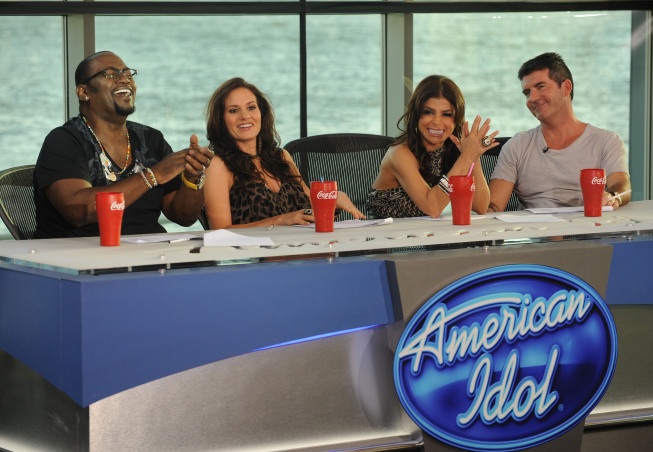
So I’m officially proclaiming to producers – I’m available to be a panelist. Quiz shows, talent shows, style shows, snarkoramas, political forums, sports roundtables, you name it. If there’s a desk I want to be behind it. I will even bring my own Coke cup. I’m ready. I’m highly motivated. And I am even willing to work five hours a week.


Monday, February 04, 2013

My comments on your comments

My Super Bowl Commercials post has generated a lot of comments. Worth checking them out. Mind if the ol’ blogmeister responds?

Reader Carol thought the kid kissing the girl at the prom was inappropriate and disturbing. When I was ten there was a girl in my class I had a huge crush on. One day, for unfathomable reasons, I decided to approach her during lunch and give her a big kiss. She clocked me in the head with her lunchbox. Lesson definitely learned.

To clarify – I said the dialect was borderline racist. I can see how it could be taken both ways.

The Oprah ad didn’t move me because I find her so disingenuousMaybe if she bought all the servicemen a car…

It also annoys me when a company wraps itself in a flag to sell cars.

Apparently the supermodel/dork kiss required 45 takes. You think the girl would know how to kiss.

I liked Todd’s comment. “What does it say about the advertising industry today when far-and-away the most effective message was written by a dead radio guy?”

Does it seem like the common denominator in all these ads was: “dad is stupid?”

I didn’t mind the sub-par fidelity of the Paul Harvey ad. It just added to the sense that he was coming back from the great beyond. Oh, and I bet it didn’t take him 45 takes.

The Kaley Cuoco Toyota spot confused me because I didn’t know what it was selling. Chocolate maybe, then Sirius-XM radio, finally it was a car. Why would I buy a car based on that ad? And there’s another example of excess. How much did it cost to do the effects on the witches gag? And was it worth it? Was it even funny?

What does a fish have to do with Beck’s Sapphire beer?

For a far better and funnier version of the Leon Sandcastle bit, see the Felix Hernandez Mariners commercial from a couple of years ago.

And finally, Chris thought I was a little “crotchety” for telling Beyonce and her army of singers to get off my lawn. He’s probably right.

Super Bowl commercials were not funny

How many times did you laugh at a Super Bowl commercial yesterday? Three times? Five maybe?

Now let’s do the math: Each 30 second spot cost $4,000,000. The production value on all of these commercials was lavish. Safe to say at least $1,000,000? Probably closer to $2,000,000. So think of all the commercials over a four-hour period and hundreds of millions had to be spent on them.

Five laughs.

And the blackout was funnier than any of them.

That’s a pretty bad average.   Maybe thirty mil per laugh?

In the future, how about hiring really funny comedy writers to conceive these high-profile commercials? I’m sorry Mad Men but you’re not delivering. For the most part Sunday’s commercials were just rehashes of similar concepts and tired elements.

Bad slapstick, anthropomorphic animals, slacker “dudes”, hot women and nerds, movie parodies, cameos of actors looking like idiots, goofy production numbers, borderline-racist dialects, and the oldest, unfunniest schtick of all-time – elderly people acting hip. God, can we finally, once and for all, and forever retire that musty gag? The people in that commercial weren’t born the last time it was funny.

The other thing I noticed during this barrage of forced humor was how out-of-touch most of these ads appeared to be. Senior proms, mother-in-law jokes, a guy mortified because he’s holding a pair of panties, and a whole bunch of astronaut ads. Astronauts? Is this 1969?

In their zeal to top each other, in their quest to stand out, Madison Avenue Agencies have turned this friendly competition into an escalating war. And the end result – most of the spots misfire. They're mini ISHTARS.  And they break the first rule of advertising – they don’t sell the product.

How many times were you watching an ad saying, “What is this for?” You think it might be for chocolate and it turns out to be a car. The zany old codgers spot was for Taco Bell. Huh????

They also break a cardinal rule of comedy: You need information before you find something funny. If you’re confused you don’t laugh. And quite a few of these spot so bombarded you with quick cuts, and crazy costumes, and stunts that you had no idea what was happening. I’m sure there were storyboards and the agency tools walked the clients through the spots and they all made sense on poster board, but when they were filmed and edited together they became one dizzying jumble of ideas and images.

It’s time to step back. Time to think of new approaches. Maybe a new pace. Less might be more. Same with the halftime show, by the way. Instead of an extravaganza that only Wayne Newton could love, how about putting Adele at mid-field, give her a mic, and let her blow away the world by just singing? You’ll have a better show and you won’t blow out the electricity in three states.

Why does everything have to be high concept? One of the funniest spots was for Best Buy. Amy Poehler as a customer just asking questions elicited way more laughs than robots beating the shit out of a guy because he kicked a tire.

Interestingly, I thought the two most effective commercials were the Budweiser Clydesdale spot and the Dodge Truck ad featuring Paul Harvey’s essay on farmers. They worked because they were emotional. I imagine in both cases the client was pitched these:

For Budweiser: The Clydesdale farts and because he’s such a big horse the fart knocks down a whole grandstand and two slackers spill their beer and yell out at the horse, “Dude!” Now we do a kind of cool Quentin Tarantino thing here – we have the horse talk like Samuel L. Jackson in DJANGO – and the horse says “Nex’ time you no be drinkin’ Bud I stomp on yo’ ass. You can be’lee dat!”

For Dodge Trucks: We want to sell this to farmers so we see him gathering all his wheat or corn or whatever shit he farms. Maybe throw in a few cows, I don’t know. But his barn is completely filled with his farm… produce/whatever. Then he gets a call. “Remember tomorrow is a farmer’s market.” “Oh, hell, how do I transport all this … produce/hay/beans/whatever?” Next shot is the farmer’s market. People are setting up their stands. And here comes our guy. He’s got his whole barn in the cab of his trusty Dodge truck. Now the farmers look up in awe, and we get a famous farmer – Eddie Albert – the guy from GREEN ACHRES – to say, “And I hear he gets good gas mileage too.”

Hire professionals. There are many comedy writers who can bring in a laugh for under $30,000,000. And think of all the money you'll save on space suits alone!

What were your favorite and least favorite Super Bowl commercials?  

Sunday, February 03, 2013

For those who don't know who Paul Harvey is

Here's a repost from 2009 when Harvey passed away.  His Super Bowl commercial was so good that I'm becoming a farmer.

On Friday night I signed off my radio show on KABC at 7:00 and was followed by Paul Harvey News and Comment. It wasn’t actually Paul Harvey, it was someone filling in for him doing a woeful impression. But I drove away feeling very proud that I was on the same radio station as the great Paul Harvey.

Paul Harvey passed away on Saturday. He was only 90.

I’m sure there will be tributes galore the next few days. They will talk about his influence. For almost 60 years he broadcast on the ABC radio network. At one time he was heard on over 1200 radio stations. They’ll praise the uniqueness of his delivery. They’ll all end their pieces with … “And now you know the rest of the story” thinking that no one else thought of that.

But they’ll probably overlook the one attribute that I think was his real genius. Paul Harvey was the greatest salesman that ever lived. I used to listen to him every chance I got, not for the news, not for the profile of the guy who invented leotards, but for the commercials. He was absolutely spellbinding. He made every product sound like something you just had to have. He was so convincing even I went out and bought Bose speakers and arthritis medicine… and I don’t even have arthritis. (I did stop short of Amway products though.)

I must say I have a soft spot for pitchmen. At State Fairs I always make a beeline to the tent where guys in bad suits and worse toupees are selling car wax and miracle vacuum cleaners. I love hearing their spiels. There’s a genuine art to being persuasive. And I always think, these hawkers are good, but Paul Harvey could sell them a miracle vacuum cleaner, and they know it’s a piece of crap.

What was his secret?

He truly communicated. He talked right to YOU. In words you could understand. He looked straight into your eyes even on the radio. He spoke with conviction, enthusiasm, and all of his arguments made so much doggone sense. Someday I may get arthritis so I better have this stuff just in case.

He ended every broadcast with: “This is Paul Harvey”… and then a beat, “Good day.” Forevermore that beat will be a moment of silence for radio’s greatest newscaster and Madison Avenue’s greatest Mad Man.

The "Lost" CHEERS Super Bowl scene


For several years I've been talking about the "Lost" CHEERS scene. David and I wrote it for the 1983 Super Bowl Pre-game show to promote our fledgling series. They ran it just before game time and it was seen by 80,000,000 people. Nothing we've ever written before or since has been seen by that many eyeballs at one time. But the scene was never repeated. It never appeared on any DVD's. It just disappeared.

Until a couple of years ago.

Sportswriter supreme, Joe Resnick has taped every Super Bowl including that one. And since the scene aired so close to the game, it was on the tape. Thanks to friend of the blog, Howard Hoffman, he was able to digitize it and post it on YouTube.  Here's the text of the scene.

So here it is. The Super Bowl is next.

Saturday, February 02, 2013

The best way to watch MASH

When we did MASH back in the Dark Ages (the 1970’s), it was a pre-digital world. The show was shot in 35 mm film. All of the editing was done by physically splicing film. Today everything is edited on computers. Point and click.  You watch the process on monitors. But back in the ‘70s (when dinosaurs still roamed the earth) the only way we could see a rough cut of an episode was to go a screening room and watch it on the big screen. We couldn’t hit pause or rewind. The projectionist ran the show and we gave editing notes on the fly. If there was something specific we wanted to see we would schlep up to the editing building and watch the scene on a Movieola, which was like a viewmaster attached to a projector. The screen was maybe eight inches. So it’s like our viewing choices were either Imax or iPhone.

Once the show was edited the post production process began. The film was color corrected, the sound fixed, credits added, and of course the damn laugh track was added.

When it was all completed, one of us on the staff had to drive to the lab in Hollywood and screen the finished product one last time just to make sure everything was perfect. I was not the most conscientious watchdog. “My name is spelled correctly?  It's fine.  Send it off.”

But seriously, I was struck by how dazzling the print was. The colors were amazingly vivid.

Then I’d watch the show on CBS the following Monday night and it never looked as good.

Once we approved the final product the show was shipped to CBS. They transferred it to videotape and that’s what they aired. First off you lost a generation due to the transfer. And then for whatever reason CBS’s color was off just a bit. The hue was a degree or two red. Red and green don’t mix and on the air the show always looked just a touch drab. This was true of most CBS shows back then. ABC was super-bright, and NBC had to best, richest color – at least to my eye.

Once in syndication the picture quality of MASH varied wildly. Depending on the quality of the print, what generation it was, the station that was airing it, and the passage of time it could look passable or your grandpa's home movies.

Why do I bring this up? Because the DVD’s of MASH look better than they ever did when they first aired. They look the way I expected after screening the final cuts. I haven’t watched any of the series on Netflix (if it’s even on Netflix) so don’t know how it compares to the DVD’s. But if you want to revisit MASH, the DVD’s are the way to go. And you can turn off the goddamn laugh track.

It always used to drive me crazy watching MASH on the air. I’d fiddle with the color and could never get it right. No one else in America had the advantage of seeing the pristine 35 mm version first so no one knew the difference. And again, it’s not a big thing – but it made me nuts.

Now, finally, after almost forty years, I can watch and really enjoy MASH episodes… except that I can’t

Now I’m constantly thinking “we could do a better joke here”, “there’s got to be a more clever ending to that scene”, “that explanation was a little clumsy,” etc. I’m hoping that somehow in the next forty years technology will fix that too.

Friday, February 01, 2013

Friday Questions

My posts on writing this week elicited quite a few Friday Questions. Thought I’d answer them while the subject matter is still fairly fresh.

Ron asks:

If you're writing a spec script should you target network or cable and also a specific network, i.e., TBS or FX, etc

Write the best pilot you can and then decide whom it’s best for, not the other way around. Don’t try to outguess the marketplace. Producers and agents are looking for original material, not the next FX show. Write something great and let all these networks fight over you.

The Curmudgeon wonders:

You're in the writers' room and someone pitches a joke and everyone laughs -- who remembers the exact joke and how? Is there somebody there who used to work for the CIA, who's had their sense of humor surgically removed, available to record these pearls as they issue? I mean, the inspiration strikes, you pitch a line, everyone laughs -- but who catches the exact line?

Tom Reeder, one of my favorite comedy writers, graciously answered this in the comments section, but it’s worth re-printing in case there are one or two of you who don’t read every comment.

In response to The Curmudgeon: The writer who pitched the line usually remembers what he or she said, and if not, there are a couple of writers' assistants in the room. It's their job to record the pearls that are produced in the room.

The writers' assistant who is at the keyboard types in the proposed change; everyone looks at it on the monitors, and most of the time it's correct -- as pitched. Once in a while, someone will say, "The way David pitched it, he had 'corn nuts' at the end." That gets fixed, and then the showrunner says the words we all love to hear: "Moving on."

Thanks, Tom. Okay, moving on…

From Wade:

Ken, you've mentioned a number of times that scripts today are by and large developed in the room and that, with the exception of a few rare individuals, no one person could write a script (i.e. from concept to final shooting draft) for shows as they are produced today.

That being the case, how are the scripts written by prospective/aspiring writers regarded when they are being assessed by potential agents, producers, etc? Are they still expected to be as good as a room written script?

Yes. Unfortunately, your spec is expected to be as good or better than the show itself. No, that’s not fair but that’s the way it’s always been.

Although, in fairness, if I’m reading a spec that’s not a home run but detect a real spark – a very funny voice, or terrific banter, or maybe very clever storytelling, that alone could get my attention. I understand that the writer is not seasoned, but if I think there’s some genuine raw talent I might be inclined to give him a shot.

Michael queries:

Do you think being a team made it easier or harder for you and David to get hired for your first staff jobs? Did you get paid less than if you were solo?

It made it easier because the scripts were better. Yes, writing teams have to split salaries but I’ve always believed that, in our case, the quality of the work was better as a result of the partnership and that ultimately we had a better and longer career. Half of something was a whole lot better than all of nothing.

To me the trade-off was worth it. And as you rise in your career you’re able to make better deals than just the Guild minimums so the money improves even if you’re in a team.

I also think that today it’s easier for teams to get hired because shows have smaller budgets and they get two writers for the price of one. 

From Ane:

I recently watched an episode of a series and noticed that an actress name was shown in the beginning of the episode, announcing she would be in it. This was not a regular of that series, but someone who had been in the show maybe 5 times all together in 6 seasons. I only noticed the name because she is the daughter of one of the regular cast members. But then she wasn't actually in that episode. Simply a mistake, or can actors get credited for more episodes than they're really appearing in? Say they're signed up for 3 episodes that season and only needed in two?

Actors who recur in series sometimes negotiate a deal for say 7 of 13. That means that they have to be paid for 7 episodes and get credit on those episodes whether they’re used or not. My guess, in this case, is that the actor was used in the episode and then his scene was cut. (And perhaps in the DVD his scene will be restored.)

In any event, it’s a fairly unusual occurrence.

I love when a character is killed at the end of one episode and then in the next there’s a scene of investigators standing over the dead body. The actor gets paid and a credit for lying still. Where do I get that job?

And finally, Carol has a question on my weekend posts about memorization:

How long does a television actor get to memorize their lines? It doesn't seem to me that they have a large amount of time for rehearsal or memorization!

They don’t. Soap opera actors have new half hour scripts every day. I don’t know how they do it.

Sitcom actors on multi-camera shows occasionally get entirely new scripts the day before they’re supposed to shoot. Occasionally, they get whole new scenes after the dress rehearsal. That can be a seven-page scene delivered to them an hour before they’re supposed to perform it in front of cameras and a live audience.

This happened to me on the very first episode I ever directed. It was a WINGS. I literally got the scene as the audience was being led in. I went to the actors backstage and just sort of roughed-out blocking in the make-up room. I told the cameramen to just get what you can and after the audience was released I’d go back and block and shoot the scene properly. You should have seen the four monitors. It was utter chaos. Camera were practically crashing into each other, swishing around trying to follow the actors. The NBC executive on hand had not been briefed on this new scene. He watched in utter horror. After the scene was over I said, “Great, moving on!” The NBC guy was practically apoplectic. I said I was trying something stylistically and it would look great on the air. The showrunners picked up on this and said they were on board. The NBC guy left when the audience did and I bet he was surprised to see the show on the air with that scene perfectly blocked.

Your questions are ALWAYS appreciated. Just leave them in the comments section. Thanks!