Saturday, August 25, 2018

Hey, weren't you "Jerk at the Bar?"

A trainer in my gym is also an actor. (I know – knock you over with a feather). He appeared on the Showtime series CALIFORNICATION playing the fan favorite, “Hollywood Asshole”. And knowing him, I bet he was good in it. Some of his previous roles included “Jerk at the Bar”, “Thug #2”, and to prove he has range – “Jogger”.

An actress I know has these impressive credits: “Vegas Showgirl” on CSI. Also “Bikini Girl”, “Sheik Girl”, “Cute Girl”, and “Homewrecker”.

Another actress friend boasts these credits on imdb: “Waitress”, “Saleswoman”, “Assistant Candidate #1”, and the part she’s best known for -- “Desperate Woman”.

And one of the most talented comic actors I know lists these on his resume: “Caterer”, “Waiter”, “Delivery Boy”, “Great Great Grandfather” (he was in his 30’s at the time), “Husband”, “Exterminator”, and my personal favorite – “Squid”.

Forget being a star, most actors in Hollywood would be thrilled for a role that actually had a name.

Usually these parts are one or two lines, usually day player roles. But not always. Remember the old guy who used to sit at the bar at CHEERS. His name was Al Rosen. He became a semi-regular. He had lines in probably thirty episodes. His name on the show was “Man Who Said Sinatra”.

“Sinatra” was the first line he was assigned, he got a good laugh, and a few weeks later the writers were looking to give a line to a bar patron and someone suggested, “What about the man who said Sinatra?” And thus a legend was born.

It’s not easy being an actor. And for every one who gets a part as “Punk #2” and “Guy in the Sewer” just remember – there are five others who auditioned for those parts and didn’t get them.

Yours truly,

Schmuck with blog

Friday, August 24, 2018

Friday Questions

Time to roll out some more Friday Question.

Roger Owen Green asks:

I've been noticing over the last few years how certain TV shows are starting to use great songs during important parts of the story, many of which are covers.

I have always wondered who is responsible for selecting the songs, because they always seem to be spot on in regards to how it fits with the scene.

Usually the showrunner, although sometimes he might confer with the studio music department.

Using great songs comes with some problems. First off they’re expensive and you need permission in addition to paying a hefty fee. Secondly, when you get into syndication you often find that the use of these songs would be prohibitive because of the royalty costs.

It used to be that if a show were taped, like WKRP IN CINCINNATI they wouldn’t have to pay huge fees to air songs. This was in the days when variety shows were still around and all recorded on tape. But when WKRP went into syndication, all those songs had to be removed. Not only was that costly, but substituting generic versions really hurt the show and its syndication numbers.

MURPHY BROWN faced the same music problem, although their syndication woes had more to do with content – the topicality of the show meant it didn’t age well.

Jon H wonders:

Have you ever done any 3-camera live audience sitcom episodes that featured flashbacks in the body of the show? DICK VAN DYKE SHOW had a few of these. I was wondering if the shows would be filmed/taped in order or if the flashback portions would be prefilmed/pretaped before the main part of the episode from which the flashbacks happened. On one hand the production would have the benefit of live audience feedback for all scenes and not just those in current time, but on the other hand, the audience would have to wait while the characters changed costumes back & forth from current time to flashback time again & again. Is one method preferred to the other?

We shoot the flashback scenes in advance. Same with dream sequence scenes, which I’ve had in my shows. And we show them back to the studio audience when they come to see the taping of the rest of the episode.

The problem with flashback scenes is they usually require a lot of make up and it might take the actors an hour or more to be ready to shoot. That hour would kill a studio audience. So it’s easier to just pre-shoot the flashbacks the day before.

From Andrew:

Has any line you've written ever taken on a life of its own outside the show or movie? Have you ever heard your own writing quoted out of context, in "real life"?

Several lines from the movie VOLUNTEERS. “We’ve got to be a mile from the sun.” “It’s not that I can’t help these people, it’s just that I don’t want to.” And after Rita Wilson is appalled that Tom Hanks has come on to her after chatting in a long flight, Tom’s character says: “Well I think I’ve put in the hours, don’t you?”

On CHEERS, Frasier saying “Everybody have fun tonight, everybody Wang Chung tonight” is still remembered and quoted.

And from FRASIER I’d say, “Food in the bathroom?”

But we never landed a big catch phrase, nor did we ever intend to.

And finally, from Joseph Scarbrough:

I understand when Larry Gelbart did the M*A*S*H episode "The Interview," it was filmed with Clete Roberts asking the questions, the actors responding in-character, then Larry sort of building the script around that material, as opposed to the other way around. When you, David Isaacs, and Burt Metcalfe did "Our Finest Hour," did you take that same approach?

No. We used the interview strictly as a way to get into the clips. We were looking for something a little novel; a way to do a clip show unique to MASH – but looking back I regret that decision to reprise the “interview” format. I think it tarnishes the original a little. It’s hard for me to watch that episode because I’m still kicking myself .

What’s your Friday Question? Note: I will have limited access to the internet for the next week so I will not be able to post your comments as swiftly as I usually do, but I do see them all, and I will get to them, and any Friday Question will be duly registered. Thanks much.

Thursday, August 23, 2018

What to say to an agent?

Here’s a FQ that became an EP (entire post).

It’s from Rat Billings:

If a writer ever gets so lucky to go out and meet with potential representation, what should they expect, what are some questions worth asking, and how can that writer make the best impression possible?

First off, dress decently. No jeans. No shorts. No T-shirts. No flip-flops. You don’t have to wear a suit and tie or formal dress but you’re going on a business meeting. Make yourself presentable. You’d think that was a no-brainer but it’s not.

Be punctual. Be prepared. Be enthusiastic. And try, if possible, to be relaxed.

If an agent is meeting you chances are he wants to sign you so he has to sell himself as much as you have to sell yourself.

And if an agent is interested in signing you it’s usually because he thinks he can place you (i.e. make money off of you). So you need to ask how he sees your career path.

He will of course ask you the same question and as long as you’re on the same page things are fine. But if you see yourself as a future screenwriter and he sees you as a sitcom writer who will one day have his own show then it’s not going to work.  Move on.  

So I would ask specifically what this agent plans to do for you. And how will he go about it? How will he use his contacts or other clients to forward your career? How will his intell give you an edge? Will he be able to package you into a deal?

Ask how many clients he has. Ask who some of them are. If he has a lot of big players he may not have time for you. Who’s he going to devote his day to – getting Aaron Sorkin’s next movie placed after it’s gone into turnaround, or getting you a meeting with DOG WITH A BLOG?

Ask how the agency works. Some operate in “teams” and others operate like little fiefdoms. When you call or email the agent, realistically how long until he returns your query? How accessible is he?

He’s going to have some questions for you, and here’s what he most likely wants to hear:

Be very clear about your career objectives. Pick a lane. Comedy or Drama. TV or movies. It helps if an agent can brand you. That’s not to say that you can’t branch out in time, but going in it’s like college where you have to declare your major.

You are 100% dedicated to your career and are willing to do whatever it takes. Assure him that you are good in meetings. If the agent can just get you in a room with someone you feel confident you can impress him. You are available for anything the agent needs of you to land a sale. If this means taking a meeting or writing a treatment you’re happy to do it. Ask the agent what you can do to make his job easier?

If you have any contacts in the industry that might open some doors that’s very helpful to agents.

Assure the agent that you’re prolific. You’re working on a new spec, a new screenplay, whatever.

And finally, don’t be too picky. Don’t say you’ll only work on single-camera comedies for streaming services. You won’t work on network shows, or multi-camera shows, or family shows. First of all, who the fuck are you? You’re just starting out. Who are you to be so choosy? And secondly, if you only give the agent a narrow target he’s less likely to represent you.

So there you go. Beyond that just play it by ear. More than anything else it’s whether you and the agent click, and you can get a pretty good sense of that early. Best of luck.

Wednesday, August 22, 2018

EP86: Peri Gilpin Interview Part 2


Ken and Peri have a free-form discussion on FRASIER, the process, acting, directing, writing, careers, publicity, matching, Broad City, etc. and Peri interviews Ken. 


Listen to the Hollywood & Levine podcast!

"Could you argue a little slower? I'm writing this down."

My wife always claims that she’s just a “character” in any story or blogpost in which I include her. She insists it’s not the real her but one heightened for comedic or dramatic effect. And that’s probably true. She’s a therapist so she likes to keep a low profile (hence no photo for this post) so she doesn’t mind that she’s referred to infrequently.

She does have one beef and I must admit it’s a valid one. There have been times in arguments when I’ve thought: “Ooooh, this would be a great scene.” I bet the wives of every writer have this pet peeve.

But if you want to write from real life and personal experiences, arguments are a great source of conflict, which is a key element of good storytelling.

Two of the very best family sitcoms relied on writers sharing personal moments. THE DICK VAN DYKE SHOW and EVERYBODY LOVES RAYMOND always rang so true because they WERE.

The truth is we don’t always come off so noble, so praiseworthy. We are often petty, foolish, dunderheads. This too is a hallmark of comedy.

We laugh because we recognize this behavior. But it also means we have to be willing to reveal to the world our foibles. “Characters” allow us to do that with a thin veneer of anonymity and safety.

And yet there is that line in real arguments – things said that are not meant for anyone to hear but your opponent. So for most writers they have two things going on – How do I win this damn argument and can I use it? And if they had to choose between the two, most writers I know would opt for the second.

Stories are just too fucking hard to come by.  

Tuesday, August 21, 2018

Richbro Radio is BACK

If you like great music from the 50's-70's and you have a computer or a device, richbroradio.com is for YOU.

Rich Brother Robbin has put together the best oldies station on the net.  Lots of songs you haven't heard in forever along with vintage radio station jingles and fun features.

Lately, Rich has experienced technical problems that kicked him off the air for a couple of weeks, but now he is BACK.

You can listen here.

The music we baby boomers cherished is slowly fading into the mist.  So (no matter what age you are) if you love the Beatles, Beach Boys, Doors, Motown, Lesley Gore, the British Invasion, the Byrds, Bob Dylan, the Brill Building Sound, Otis Redding, instrumentals, girl groups, folk music, Doo Wops, the Mamas & Papas, the Wall of Sound, Sonny & Cher, your favorite dances, one hit wonders, Jackie Wilson, Jefferson Airplane, Elvis, Little Richard, Chuck Berry, the Sun records roster, surf songs, hot rod songs, soul, blue-eyed soul, follow-ups, flip sides, million sellers, bubbling unders, and the Monkees then Richbroradio.com is for YOU. 

It's always hard when you go off the air.  You've got to reclaim your listeners.  But if you're returning or you're new you're going to be thrilled that it's back pumping out the hits 24 hours-a-day.

Tell 'im Beaver Cleaver sent you. 

Vintage Friday Questions

I've had a number of readers say they really liked when I reran Friday Questions from 10 years ago since who bothers to sift through the archives?  And there was some good stuff in them.  So here's another post from many years ago.  Let's see if my advice still holds. 


willieb asks:

Any truth in those "everybody has a screenplay" stories ("My hairdresser/valet/dry cleaner gave me a screenplay to read")? Have you been bombarded with sample scripts? If so, what's the weirdest situation you've had to deal with?

I’ve received scripts at my high school reunion, I’ve told the story about getting pitched a movie while making funeral arrangements for my grandmother, and a couple of years ago one of the host helpers during my mother’s condolence wanted to pitch me a pilot idea. When I announced minor league baseball people would come up to the press box all the time with scripts. It's not like there was great security in ballparks in Rochester and Toledo. If someone had the lung capacity to climb those stairs they could get in.

A director I know was attending High Holiday services one year at his temple and a fellow congregate pulled a script out from under his prayer shawl.

I’m sure a few of the working writers who read this blog could weigh in with their own appalling stories.

Cap'n Bob Napier wonders:

I just saw a M*A*S*H episode written by MacLean Stevenson. When actors do this are massive rewrites usually required or are they pretty good to start with?

I don’t know about that particular episode but yes, massive rewrites usually are required. One reason: they often give 90% of the good lines to themselves. But in fairness, they’re not writers. If I were to suddenly have a big guest role in a MASH or CHEERS episode I’m sure I’d suck. I’m not an actor.

I will say this though, Alan Alda’s scripts were terrific and we changed very little.

From Steve:

On a show like Cheers, do the showrunners or writers know where they want their main characters to wind up by the end of the series (e.g., Sam & Diane will finally get and stay together), or is that unusual and more typically the story arcs are just thought of season by season, or even every few weeks?

First off, it’s unusual that shows are so successful that producers can determine when the series will end. Usually it’s America.

In the case of CHEERS, we always thought it would be great to bring Diane back for the finale but Shelley Long had to be available and agreeable to doing it. If she were in Norway making a movie we were shit out of luck.

If producers know where the finish line is they’ll usually work towards it in the final season. Sometimes it’s a five or six episode arc that leads up to the conclusion. For LOST it’s a three year arc.

I still think David Chase doesn't know how THE SOPRANOS end.

A bigger question than what to do for the finale is how long the finale will be? Networks try to make huge events out of these and stretch them from a half hour to (if they had their choice) nine hours plus an intermission. This greatly affects the storytelling. MASH, CHEERS, FRASIER, FRIENDS, and SEINFELD were waaay longer than they needed to be but the networks got one last massive payday out of them. In my opinion, as good as all of them may have been, they would have been far better if they were only an hour.

Kudos to THE MARY TYLER MOORE SHOW, NEWHART, and EVERYBODY LOVES RAYMOND for ending their series with half hour episodes. For my money they’re three of the best finales ever. And that's one reason why.

My partner and I have had three series and none of them had a planned final episode. Once the network says, "You're canceled! Now get out!" that pretty much puts the kibosh on your glittering two hour finale. If we knew we were doing a last episode of ALMOST PERFECT the plan was to bring back all the characters from our other two series and end all three at once. Well, maybe when our next series is canceled.

Monday, August 20, 2018

Another secret of comedy

THE PLAY THAT GOES WRONG does pretty much everything right. It started in England and continues on Broadway. For all the heavy “important” plays that have come and gone over the past year, this hilarious farce continues to bring in and delight audiences.

The premise is simple. We’re there to watch a drawing room mystery and every conceivable thing that could go wrong does. Missed cues, scenery falling, effects going off at the wrong time, wardrobe malfunctions, etc. The cast was wonderful and the play was a masterclass in comic timing.

But there was something else that made the play work, something under the surface. But it was key, and without it the entire show would fail. What was it? Simply this:

The characters did not know they were in a comedy.

In other words, the actors played it straight. There was no winking at the audience. There was no acknowledgement that they were acting extraordinarily silly. To the characters, these events were real. And they were catastrophic – to THEM. To us, the audience, they were uproarious.

For my money, you get stronger heightened comedy when the characters don’t ham it up. You can put them in absurd very broad situations, but if they take it seriously then their reactions to the absurdity make sense.

The fact that the drawing room play failed was so funny was because the characters so wanted it to succeed. As the world was collapsing all around them they struggled to persevere, maintain their dignity, and control the damage. Instead of taking the stance of “Did you all see that?” they chose instead “I hope you didn’t see that.” And that one attitude made all the difference in the world.

If you’re writing a comedy, or directing a comedy, keep that principle in mind. It requires the actors to trust the material. If they don’t they sometimes get too big or try to save the day by milking laughs or breaking character. That’s the fastest way for a show to go into the tank.

Keep it real.

UPDATE:  I will have limited access to the internet over the next couple of weeks so comments may not appear in as timely a manner.  I will get to them but maybe as long as a day later.   Feel free to curtail use of comments  during that period.  Things will be back to normal soon.  Thanks.

Sunday, August 19, 2018

Another Opening, another Closing -- the same night


I'm participating in another one-day play festival at the Ruskin Theatre in Santa Monica.  That's where five playwrights meet at 9:00 AM, are given a topic, two actors, and three hours to write a ten-minute play.   Actors and directors learn and stage them in the afternoon and tonight at 7:30 and 9:00 they're presented to you the lucky public.

It's a great writing exercise.  As fellow playwright, Matthew Weaver, observed:  You don't have time to question whether something is "good."   In a sense, the speed of the exercise forces you to get out of your own way.

A number of plays I've written for this project have been accepted in festivals around the world.  Two of them will be included in the Short + Sweet Hollywood Festival next month in, of all places, Hollywood.  One I'll be directing as well.

In fairness, some other plays I wrote for the Ruskin will mercifully never see the light of day again.  But that's part of the fun.  You never really know what you're going to get.  And that adds a charge of electricity to the night.

Anyway, here's where you go for more information.  And if you're there, stop by and say hello.  I'll be the one either beaming in the corner or hiding behind a plant. 

Saturday, August 18, 2018

My favorite Aretha Franklin moment

So many deserving tributes to the Queen of Soul.  But do you know this story?

One year at the Grammys, Pavoratti was supposed to sing “Nessun Dorma,” the famous final act opener from Giacomo Puccini’s Turnadot. He developed a sore throat and couldn't go on. So who stepped in last minute? Aretha. And all she had to do was perform it at Radio City on live national TV later that night. My R-E-S-P-E-C-T has no bounds.

UPDATE: Thanks to some astute readers, here is that performance.    Check it out.  What a spectacular and courageous talent. 

Friday, August 17, 2018

Friday Questions

Friday Questions everybody. Come and get ‘em.

Dsull leads off with a question about the five sitcoms I listed as my all-time favorites.

With the exception Seinfeld, all your favorite sitcoms come from your younger days. Do you think you have a bias toward that era or do you genuinely believe the shows were just better then? And if that's the case, any thoughts on why? Or is it possible that after writing professionally for so many years, the shows just don't feel as fresh to you? Granted, many lists would have quite a few of your shows on it so obviously your list will look different than most!

Part of the reason those older shows were on my list is because they inspired me and made me want to become a writer. Are they “better” than more current shows? That’s a matter of personal taste. But I will say this. These older shows still hold up some fifty or sixty years later. Will 30 ROCK or VEEP (I selected series that won Best Comedy Emmys) be seen and appreciated sixty years from now?

When I taught a “Foundations of Comedy” course at USC and screened an episode of BILKO to a room of a hundred Millennials, it received uninterrupted laughter. If you are a student of comedy it’s worth going back and watching these iconic series.

SK has a question regarding my recent podcast where I talked about the process of making an episode of CHEERS. Check it out if you haven’t already.

"The Making of CHEERS" podcast had a detail I never considered: there is more time to write (and rewrite) episodes earlier in the season; but episodes written later are sometimes only single drafts. That inspired me to ask ask my first-ever Friday Question (and it's multi-part!): Do those time considerations affect the order that episodes are written? Are episodes written in the planned order of production/broadcast? Or were "important" episodes (like those broadcast during sweeps, or season finales) addressed earlier to provide more time to refine them?

One of the reasons networks don’t like serialized shows, especially sitcoms, is because they like the flexibility of airing them in whatever order they please. This often leads to fights between the showrunner and the network and most of the time the network wins.

Some episodes are programmed specifically for sweeps. Those usually involve stunt casting or weddings. And if filming is subject to availability of the big stunt guest star, those episodes might be filmed early and held back.

Also, holiday-themed episodes are locked into air dates regardless of when they’re filmed.

Personally, as a showrunner I liked the flexibility of being able to shuffle the cards. If we had a show that didn’t come out great that’s the one we would save to go up against the World Series or the finals of THE VOICE. Being able to hide your weaker shows is a blessing.

Tim Cabeen also listened to my podcast about the making of CHEERS.

I have one curious question: Was there ever an episode that was so good from the first draft that little or no rewrites were needed? There are so many good ones that it would be cool to know that any one of them was perfect from the get go.

There was only one CHEERS script that received no rewriting whatsoever, and it was one that my partner David Isaacs and I wrote. Now before you think, “Wow, it must’ve been the greatest first draft ever” just know that the reason it wasn’t rewritten was because there was a WGA strike and no one was allowed to rewrite it. It’s the first Bar Wars episode. It came out okay, but you know what? It could have used a rewrite.

Finally, from Mike Bloodworth:

Have you heard of or seen MASTERCLASS? It’s a series of online classes taught by some really big names. They run the gamut from Comedy with Steve Martin, Cooking with Gordon Ramsay and Photography with Annie Leibovitz. But how its applicable to this blog is they also have writing classes. Including Aaron Sorkin, Shonda Rhimes and David Mamet. The reviews I've read have been mostly positive, but not all. And of course it’s not free. What's your opinion of this kind of instruction for T.V./screen/theater? If they asked you and David to do one, would you?

Sure I would. To get folks like Aaron Sorkin and Steve Martin on board you gotta pay big bucks.Sign me up!

Are the MASTERCLASSES good? I’m sure they are. I have not seen one. I suspect some are better than others. The big question, which I can’t answer is, are they worth what customers have to pay to take them? Would love to hear from some readers who have taken one or more of these courses. Thanks.

Please leave your Friday Questions in the comment section.  Thanks for that too. 

Thursday, August 16, 2018

The one reboot I want to see

The reboot craze continues. There’s talk of ALF returning (thank God!) along with FACTS OF LIFE (dear God!). 24 may get a prequel. I guess the MAD ABOUT YOU reboot won’t happen, but as you all know there’s talk of FRASIER possibly returning to the airwaves.

Networks are basically admitting they can’t develop anything new. So I figure, since every show from television’s past is suddenly being considered for a revival, what about the series that began originally with a 49 share? Obviously America was in love with that show.

So I think one of the networks should do a reboot of AfterMASH. Let us finally get that show right.

First off, casting.  We need to go a year or two younger.   Liam Hemsworth for Klinger. Will Poulter for Colonel Potter. And we need to go diverse so Michael B. Jordan for Father Mulcahy. Roz Chao, who played Klinger’s young Korean wife, hasn’t aged a day in thirty years so she can still keep her role.

The show was originally set in a Veteran’s Hospital. What a goldmine for comedy that was! For the reboot we set it in the infirmary of a luxury cruise ship. That way we can work in a little LOVE BOAT action.

The show is still set in 1953 right after the Korean War (we must preserve the dignity of the franchise) but all the patients are in their 20’s and hot. The Korean War was brutal and only the handsome survived.

To ensure that the dialogue reflects the comic attitude and style of today, only Millennials will write the show. I may come by once or twice to explain what the Korean War was.

The stories will be more upbeat. Prosthetics is an area for comedy that bewilderingly was not covered the first time. Same with shock treatments.

Keep the haunting AfterMASH theme but just have KISS re-record it.

Whattaya think?

AfterMASH could be the reboot to end all reboots.

Literally.

Wednesday, August 15, 2018

EP85: Meet Peri Gilpin of FRASIER


Peri Gilpin, who played Roz on FRASIER talks about the possible
FRASIER reboot, working with that cast, her career, and her dad who was a celebrity himself.

Listen to the Hollywood & Levine podcast!

The one I'd take back

There was a good article in a recent NEW YORK MAGAZINE called “the One I’d Take Back.” They asked six comedians (like Patton Oswalt) which joke or jokes they’ve told in the past that now they now regret and wish they could take back. 

There are a number of scripts I’ve written I wish I could have back, but that’s just because with the benefit of experience I think I could do a better job. It has nothing to do with questionable content.

But the article did get me thinking back to my days as a wise-ass Top 40 DJ. Very rarely did I “get in trouble” because of things I said on the air. I was pretty good at walking that line. The biggest brouhaha I ever got into was on TenQ in Los Angeles in 1977. I was playing a commercial for a Donna Summer concert that was going to be held at the Fabulous Forum (then-home of the Lakers and Kings). I said, “today the Forum, in ten years Magic Mountain.” Someone from her record company had a shit fit and raised a stink. I was told to not make fun of Donna Summer. (By the way, I was right.)

What I did do was poke fun at recording artists on occasion. Believe me, I was not unique in that. Dan Ingram, Don Imus, Larry Lujack, Robert W. Morgan, Howard Stern, and others routinely teed off on artists.

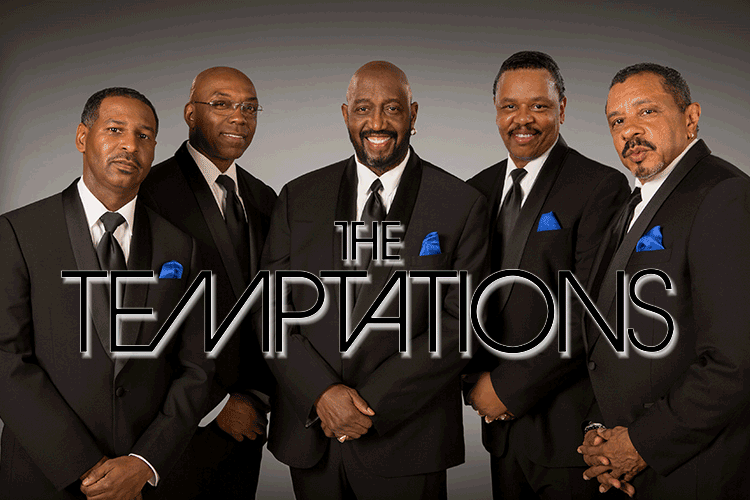
So looking back, I mocked Bob Dylan. That’s still okay. I mocked Barry Manilow. Still acceptable. Mick Jagger – no problem. Psychedelic bands – safe targets. The Partridge Family – go to town. The Temptations? I’m a racist. I would goof on how hip they tried to be. But it made no difference. Had I known then what I know now, the Temptations would have been off-limits, period. I can argue that you needed to understand the context and I was an equal-opportunity-offender but that’s one I’d like back.

I’m sure these comics felt the same way – you listen back to some of the things you said that you thought were perfectly fine and funny and now you just cringe. Yes, comedy often offends someone, but in this case I offended myself. Fortunately for me, these were live radio shows. Unless I play you the tapes, you’ll never hear them. Thank God this was before Twitter.

Tuesday, August 14, 2018

My thoughts on Mini-rooms

Networks and studios have found yet another way to exploit writers. Their latest brainchild: Mini-Rooms. Here’s a Vanity Fair article about it.

When a network orders a pilot for a short series (6-13 episodes) they now put together a small room of baby writers for two or three weeks to come up with future stories and/or scripts. If the show is then picked up they already have a lot of the stories broken and writing completed.  They don’t have to hire a full room of writers and even if they do there’s now less work to be done so the time frame is less and the network or studio is in an advantageous bargaining position.

So writers are hired on the cheap. And in a business where stability continues to dangerously shrink, TV staff jobs start seeming like four-week freelance assignments. Writers have to cobble together a bunch of these a year to survive. And getting any TV writing job is harder these days. Way more hoops. You have to be approved by the network and the studio and pod producers. Generally it takes meetings with three or four entities before a writer is offered even an entry-level job.

Can the WGA stop this? Not really. The networks/studios have found a loophole. They’re paying Guild minimums to these Mini-room baby writers (who understandably are just relieved to be working, even if it’s for the minimum and only for a couple of weeks) so they’re not doing anything strictly illegal.

And who is there to safeguard and protect writers from this insidious practice? Well, it should be agents. That’s their job. They could fight to ensure their clients got proper above-scale compensation. So why don’t they?  Because commissions are no longer their primary source of income.  In this new conglomerate world agencies now survive by making package deals and owning a percentage of shows.  Hard to fault them.  Everybody has to adjust to this new marketplace. But writers do receive way less protection than they used to. 

This is just another reason why the WGA wants to renegotiate their long-standing agreement with agencies.

Personally, I loathe the idea of Mini-rooms. If you hire me and my writing partner to create a series for you the pilot will be in our voice. We don’t need to enlist the help of inexperienced writers for pennies on the dollar. And quite frankly, it’s insulting to us that the studio/network would even suggest it. It’s like we can’t deliver a pilot on our own? We have to surround ourselves with help?

It’s one thing if you have a multi-cam pilot in production. Scripts have to be rewritten in one night following run-throughs. Putting together a mini-room for one or two nights makes sense in that case. But guess what? Studios/networks WON’T pay for those mini-rooms. Instead, writers have to rely on their experienced colleagues to come in as a favor, usually for a nice gift that comes out of the showrunner’s pocket.

And even that is now further exploited because writers are putting together mini-rooms to punch up pilot scripts before they go to the network. And those rooms are not compensated. In those cases I lay the blame squarely on the writer who created the pilot. First of all, where is his pride? Secondly, he’s being paid a lot of money to write a pilot. I get a free lunch in Styrofoam? I’ve helped out on a couple of pilots like this (not knowing the situation beforehand) but never again. And if I ever find myself in this situation in the future, believing I was helping out during production when it was actually pre-production, I will wish the creator well and go home.

Just remember this: All these changes in the system are designed EXCLUSIVELY to help the studio and network  and agency and save money. They are NEVER to benefit the writer. They are NEVER to improve the quality of the creative process. So pretty much anytime there’s another one of these new trends like Mini-rooms or Paper Partners you can pretty much bet that my position is I’m against it.

Monday, August 13, 2018

The JEWEL OF THE NILE timeline (and while I'm still haunted by it)

Got this in the comments section last Tuesday and thought, why not take a post to set the timeline on JEWEL OF THE NILE. It’s a re-post, but warning -- it takes a horribly tragic turn and is difficult to write.  You'll see why.

Unknown wrote:

Another recollection of 'Jewel of the Nile' from Kathleen Turner in today's NYMagazine:

Were you surprised or hurt at the way Michael leaned on you to do that movie?

That was a bad blowup. I had signed a contract to do a sequel [to Romancing the Stone] but the script for it [The Jewel of the Nile] was terrible. What had happened was that Romancing was so successful that Diane [Thomas], who wrote the original script, evidently asked Michael for what he felt was a ridiculous sum to work on the sequel. So instead, he went with these two guys and what they came up with was terrible, formulaic, sentimental. Anyway, I said no. Then I found out I was being sued for $25 million [for breach out contract]. My position was that, yes, I signed up for a sequel but I didn’t sign up to compromise the quality of my work. Eventually Michael and I talked.

How’d that go?

He said, “What would it take for you to do this film?” I wanted Diane back, or at least to give input. And Michael did go to her for some alterations. But ultimately I read the script on a plane to Morocco, where the film was shooting, and I was furious. It didn’t have what Michael said it’d have. When I got to the hotel in Fez, Michael and I sat down on the floor with three versions of the script. We were trading pages to get a script that was acceptable to both of us. It was, “I’ll do this if you’ll do that.” It was frustrating. But I do have to say, when I got sick Danny and Michael called and said, “If you need anything kid…” So they’re true friends.

[Don't know if the '2 guys' were you and Isaacs or Rosenthal & Konner, but interesting anyway.]

Diane Thomas wrote ROMANCING THE STONE and did a spectacular job. Practically everything you saw up on the screen – the humor, suspense, warmth, vivid imagination, that was all Diane.

She of course was approached to write the sequel but was tied up writing a movie for Steven Spielberg. So Michael hired the team of Mark Rosenthal & Lawrence Konner to do the screenplay of JEWEL OF THE NILE.

That was the draft Kathleen Turner had trouble with, as did Michael Douglas.

At this point David and I were brought on to do a rewrite. We did a rather extensive one, primarily trying to make sense of the story.

We also had a time crunch. In order to start filming in Morocco, their government had to approve the script. And the script needed to be translated into French, which would take a few more days. Additionally, there was the threat of a Writers Guild strike so we were pushed pretty hard to finish the rewrite quickly.

The hardest part of the script was the first act. In ROMANCING THE STONE, Joan Wilder (Kathleen Turner) learns right away that her sister has been kidnapped and she has to go rescue her. The story is off and running.

Remember the end of ROMANCING THE STONE? Jack (Michael Douglas) buys a boat and as a grand gesture presents it to her in Manhattan and the take-away is that they’re going to sail around the world together and live happily ever after.

So now we pick them up in the sequel. They’re tan, they’re sipping champagne, they’re livin’ the life. No more adventures for these two. They’ve got it made.

Except we need an adventure. And a reason for them to abandon the good life and once again throw themselves in harm’s way. Not an easy task.

We could say that they’re just bored, but that’s a tough sell to an audience that would give anything to trade places with them.

Anyway, we did the best we could in the time frame allotted and turned it in. Michael loved our rewrite but still had trouble with act one. Don’t blame him. So did we.

He called me at home from Paris on a Friday night to say he did something not entirely kosher (but producers do what they have to do to get movies made). He had called Diane Thomas and asked if she’d work with us on the first act. Were we okay with that? We were thrilled. These were Diane’s characters. Who knew them better than she did?

She was only available that weekend, which meant working Saturday and Sunday. We didn’t care.

Diane was an absolute delight. So smart, so inventive, so kind. We meshed instantly. It was a wonderful weekend and I was proud of the results. So was Michael and off the script went to be translated.

The Moroccan government approved it and plans were made to start filming in the late spring.

We moved on and accepted an offer to create a new sitcom for Mary Tyler Moore.

Michael called and asked if we could be on the set during production. Normally we would have said “sure.” Morocco wasn’t a picnic, but there was also the South of France. Plus, what a cool experience. But we were locked in to the MTM project and had to pass.

So Michael did what I thought was a strange thing. He hired the original writers, Rosenthal & Konner to be there for production. So what did they do? They tossed out most of our script and put their original material back in. I defy anyone to explain the plot of JEWEL OF THE NILE.

Okay, here comes the truly horrible part. For helping Michael out that weekend he bought Diane a Porsche. A few months later, with her boyfriend driving that Porsche at 80 mph on rain-slicked Pacific Coast Highway, the car lost control and crashed. Diane Thomas and another friend were killed. Diane was 39.

That was 33 years ago and I will be forever haunted by it. I can’t drive PCH without thinking about her, I can’t see a Porsche without thinking about her, I can’t see a Michael Douglas or Kathleen Turner movie without thinking about her. I certainly can’t watch ROMANCING THE STONE or JEWEL OF THE NILE without thinking about her. And maybe now, if you do any of those things you’ll think about her too.

As a proud alum of UCLA I’m happy to say that the UCLA Extension Writers’ Program created the Diane Thomas Screenwriting Award in her honor.

You can understand now why I can't tell that story without tears in my eyes.  And why I'm going to end it here. 

Sunday, August 12, 2018

"What" writing partners argue about

Readers always ask if my partner, David Isaacs and I have fights when we’re writing. Sure, but the trick is to never make the fights personal. We can have a heated argument over a story point and then just go to lunch and discuss baseball. If we disagree on a joke pitch we’ve found it’s way easier to just toss it out, come up with something new, not waste a half hour on the argument, and result in someone being unhappy.

That said, we have had one disagreement that has been ongoing for literally decades.

I think characters should say “what?” occasionally when they hear a big piece of information and David thinks it’s unnecessary.

“I want a divorce.”
“What?”

“There’s a tank coming.”
“What?”

David thinks I rely it on too much.

“These apples are good.”
“What?”

Okay, maybe he has a point there. But I contend that people say “what?” in daily conversation way more than they even think they do. And to support my point, if so many people didn’t say it, then the expression would never have evolved to “What the fuck?” I’d like to think that through our scripts I helped coin and popularize that now-treasured phrase.

And I also exercise some discretion.  I never pitch "say what?"

So how have we resolved this sticky matter?

We barter.

David will say, “I’ll give you a ‘what?’ for two ‘so’s’.” Yes, this leads to other arguments (“I have a ‘what’ banked from Thursday.” “No, you used that ‘what’ Monday.” “But we cut that speech.” “It still counts.”), but on the whole this has gotten us through hundreds of scripts. And it’s an example of the kind of stupid shit partners bicker about all day.

And don’t get us started with when to use … and when to use --.  The police were once called.

Saturday, August 11, 2018

Great advice for ALL writers

This quote from the late Oscar, Tony, and probably Heisman Trophy winner, Mike Nichols:

Every scene is either a fight, seduction, or negotiation.

Now you could say he’s stretching it, and you could argue that at times seductions are negotiations, but the real point here is that every effective scene needs some dynamic.

Two baseball fans in the stands just talking about the weather isn’t interesting. Umpires trying to decide whether the rain is coming down hard enough to stop a World Series game is.

A couple agreeing on what color to paint the house is boring. A couple throwing paint at each other is not.

Your scene needs some conflict, or one of the characters has a specific goal. There’s a dramatic reason for the scene.

It may be subtle. People are always looking for that little edge, couples are consciously or subconsciously trying to be in the power position in their relationship. Although a union contract might not be the topic on the table, this is still negotiation. Trying to get someone to agree with you is a form of seduction. The truth is in our daily lives we use most of these conventions all the time in our interactions; we just don’t recognize it. But for writers, they're the fuel that makes the engine go.

Rule of thumb: if you can just lift a scene out of a screenplay or TV show, or whatever without anyone missing it then it didn’t belong in the first place. We’re in a golden age of TV drama. Watch the good shows. See how every scene, every moment has a purpose, and is integral to the narrative.

A fight, seduction, or negotiation may be a little simplistic. But it gives you a good starting point. If you’ve written a scene that is just flat you can check it against those three dynamics. If it has none, or one but very mild, suddenly it’s no longer a mystery why your scene doesn’t work. Pick one or two or strengthen one or two.

Use Nichols’ quote as a guide. It may not be perfect, but it’s much more eloquent than mine.

A scene has to have… stuff.

And that’s why he is who he is and I am who I am.

Friday, August 10, 2018

Friday Questions

Some Friday Questions to kick off your weekend.

Chris Thomson is up first.

I am probably wrong, but you never seem to put Boston Legal in your examples of excellent series writing.

Just wondered if there was history there or whether you just didn't rate the writing or acting?

Or you just didn't watch it.

I watched it and liked it. So no disrespect intended. A couple of my friends even wrote on it (when David E. Kelley let them). It was entertaining, but there are better shows. I didn’t even think it was David Kelley’s best series. There were a few years of THE PRACTICE that were way more compelling in my opinion.  

From Marty Fufkin:

If the proposed Frasier reboot does a Lou Grant and become a drama (which I think is a great idea) would you still be interested?

No. The big attraction for going back and writing for that character would be having the chance to once again write smart sophisticated TV comedy.

LOU GRANT was an excellent show but the character Ed Asner played in that show was not “Lou Grant.” He was someone else just taking Lou Grant’s name.

Christopher Lowery wonders:

Watched an episode recently with Colonel Flagg (Edward Winter-"Rally 'Round the Flagg, Boys'"-Feb 14, 1979) with the new ensemble/tone.

Was the style of writing/timing/anything different bringing a character from the more "zany" early few years of the the show?

What were your impressions of the final outcome compared to the character's early days of the show?

I think we did a pretty good job of keeping the spirit, tone, and humor of the Flagg character. We modeled our “Flagg” after the one Larry Gelbart established.

And I thought it worked. Flagg was such a fun character to write, but we were well aware that a little went a long way because he was so broad. So in the four years that I was with the show we only used him once.

And finally, from jcs:

In the first season of FRIENDS there is a wooden support beam close to the flat's door, in the left corner of Monica's kitchen. This beam later magically disappears as it probably blocked valuable camera angles.

Did sets on your shows ever lose certain features without explanation?

We had a very limited budget on the ALMOST PERFECT pilot. So for Nancy Travis’ house we just used Helen’s house from WINGS and re-dressed it. When AP got picked up to series we had to construct a whole new house. We kept the basic structure – where the front door was, etc. but suddenly her house went from Cape Cod to Craftsman.

Same with her workspace. It completely changed after the pilot.

We wanted to reshoot the pilot to make the sets consistent and Paramount just laughed. Looking back, we never got complaints from viewers.

What’s your Friday Question?

Thursday, August 09, 2018

The incredibly stupid new Oscar rules

I was going to do a post about Kathleen Turner’s JEWEL OF THE NILE comments but with the Motion Picture Academy drastically changing Oscar rules I thought I would address that today and save the JEWEL for Monday.

If you haven’t heard the news: The Academy this year will add a “Best Popular Movie” Oscar and for the first time, not air some of the categories live.  A few awards will be given away during commercial breaks and snippets of acceptance speeches will air later in the broadcast. Those categories have yet to be determined.  Let the cockfights begin! 

Congratulations, Motion Picture Academy, you just screwed the pooch.  

First understand these changes have only been instituted to improve ratings. They have nothing to do with righting wrongs or ensuring that deserving artists are given their due. This is just because they want better demographics. Period.

This is just so BLACK PANTHER fans have something to root for.

So the plan is what, “popular” movies in one category and art films that no one sees in the other? What happens if a movie is both? So BLACK PANTHER is not eligible for “Best Picture” because it’s also popular? Or does it get nominated twice?  What constitutes "popular" -- Melissa McCarthy in the cast? 

And if there’s more interest in the “Best Popular Movie” category than “Best Picture, “ then “Best Picture” becomes an afterthought. Say goodbye to any credibility. Say goodbye to rewarding excellence in filmmaking.

“Popular Movies” already have an award. It’s called MONEY. The filmmakers all get rich. They don’t get an Oscar but they do get a mansion in Trousdale.  Isn't that enough?  

So the Oscars are now a joke. Next?

As for not airing all the categories, that means you don’t hear the nominees’ names read. They’re nominated for an Academy Award, probably the highlight of their professional career, and the telecast won’t provide the two seconds required to say their individual names on TV.

Yeah, THOSE are the problems. Not a stupid bit where the stars go to a nearby theater and hand out candy and take selfies for ten minutes. Not endless clip montages. Not hosts singing “We Saw Your Boobs.” Not pizza deliveries.  Not monologues all for the benefit of Oprah.  Not cringe-worthy banter by actor presenters. Not Academy president bullshit speeches on how Hollywood “cares.”

The Oscars can only re-spark interest if they actually MEAN SOMETHING. But you cheapen the award, you strip away any class and luster the ceremony had, and what you’re left with is… the Silver Globes. Not even the Golden Globes because at least they’re honest about what attention whores they are. And they serve dinner.

Having an Oscar is really going to mean something when MAMA MIA 3 wins Best Picture. 

Wednesday, August 08, 2018

EP84: Meet Porky Pig and the world of animation voice over


Ken’s guest is Bob Bergen, one of the most successful cartoon voice over artists in Hollywood.  It’s like having Porky Pig and Luke Skywalker give you a tour through the exciting behind-the-scenes world of animation.   


Listen to the Hollywood & Levine podcast!

How to win over TV critics

Yesterday, I talked in general about the TV Critics convention, held every summer (stretching into the fall and early winter) in Los Angeles.

These bedraggled TV critics have to sit through hundreds of panel presentations of all the new shows and any other programming these 200 networks want to serve up.

I’ve been on these panels, pitching our wares, and I usually look out at a sea of bored faces.

But one of our panels proved to be a big hit.

It was 1995 and we were doing a panel for our new CBS show, ALMOST PERFECT. I was on the stage along with co-creators David Isaacs & Robin Schiff, and stars Nancy Travis & Kevin Kilner.

We gave the usual bullshit, they asked the usual questions – your typical uninspired session.

And then a critic asked Kevin what he did before he became an actor? He said he worked for a bank and one of his jobs was to audit a company that sold a popular brand of chicken to markets and restaurants. Yawn.

Then Kevin said, “Do you ever wonder how they slaughter those chickens?”

My first thought was, “Holy shit! This may go down as the worst new show presentation EVER.”

Kevin went on to explain in graphic detail how indeed they killed their chickens. 

But suddenly I saw all the critics perk up. For the first time they were actually INTERESTED. They DID want to know how chickens met their demise. And then they had follow-up questions.

I’m sure for them it was just so refreshing to not be hearing “how our show is a reflection of the angst that young single people go through… bla bla bla.”

Within minutes we had won them over. And our session was one of the most talked about of the convention. Thank you, Kevin Kilner.

So if you’re a producer and your panel hasn’t gone up yet, you might want to Google “How to kill a chicken.” Especially if your show is about a cop who doesn’t go by the book or a married couple whose adult child moves back into the house.

Tuesday, August 07, 2018

Imagine a convention in the Hotel California...

It’s TV critic season here in LA. Like the swallows returning to Capistrano, every summer TV critics from around the country converge on Los Angeles to hear panels from all the new shows, network executives, etc.

My heart goes out to them.

Picture a convention with sessions every hour, seven days a week, and it lasts for a month. "You can check out anytime you like, but you can never leave."

Having been a showrunner who numerous times was a member of one of these panels I totally understood why the gaggle of critics could not have looked less enthusiastic to see us. We were probably show 67 of 85. I’d look out at the audience and half these people were on their computers clearly reading email or watching MLB online.

In the online trade sites they do an article for each of these sessions. And they’re the same thing. These producers are touting their new shows, explaining why theirs is different and special, praising their brilliant casts. Flash forward to October and most of them will get roundly and justifiably panned by these same critics. Come next March and 90% of them will be gone.

Hey, I don’t blame the producers. When I was up there I touted my show, and how we were elevating sitcoms to an art form. That’s the game. Producers wax poetic, critics order hiking equipment from Amazon.

Each network and cable network and streaming platform has its few days carved out. And those usually end with parties for the critics sponsored by these networks. I think without the alcohol these poor reviewers could not make it through the month.

I certainly see the reason for conference. It allows TV critics access to all the stars and producers they’ll be covering. They can establish relationships, ask questions that might be relevant to their specific location or audience, and meet executives who otherwise go out of their way to avoid them. And since there are so many shows and networks the conference just continues to grow. Originally there were three networks, they each had their two or three days, and the whole shindig was over in a week and a half. Next year the new Apple Network will be joining the party (whatever exactly that will be) and probably six more. Going to the TCA Convention will be like shipping out to Afghanistan for a year.

It ain't worth the free drinks and all the shrimp you can eat.  

Tomorrow: how one of our panels became the hit of that year’s convention.

Monday, August 06, 2018

So FOX is going to save some money

Michael Thorn, in his first year as entertainment president of Fox Broadcasting announced that this year they will make the same number of pilots as before but they will only buy half the scripts they’ve done in past development seasons.

Fox will be going through, as they call it, a “transitional” year. Once Disney takes over 20th, the Fox network, which will remain with Rupert M. will no longer have a studio feeding it product. In the past, as much as 90% of the programming on Fox has come from its sister studio, 20th. And the other networks have similar statistics. Eventually, Fox will start a new production company, essentially 20th.2.0, and within a few years they’ll be back up to speed. But for now they’re trying to ease off their dependence on 20th.

As for future development plans, Thorn said this: “In years past, I feel all the broadcast networks, including us, bought way too many scripts, 50-60 dramas and that many comedies. We are going to be much more disciplined in our buying and probably buy half as many scripts for approximately the same number of pilots we’ve been doing in years past, about six of each -- nine comedy and drama.”

Yeah, but here’s the thing:

Every few years one of the networks tries a version of this. “We don’t need as many pilots.” “We’re going straight to series.” “We’re going to be much more selective.” “We don’t need pilot season at all.”

And every time a network institutes this the result is utter fucking disaster. They spend the entire next season scrambling, yanking shows off the air, patching up their line up with hastily thrown together specials or reruns, constantly playing catch-up. And what they discover is that the money they saved in reducing their development slate was small compared to the money they lost due to a poor season.

So the following year they’d go back to ordering more pilot scripts and making more pilots.

What Fox might be thinking however is, we’re going to tank anyway once we have no studio affiliation. So why throw good money after bad? They’re not going to say that, of course. Unlike the San Diego Padres, they can’t just admit this is a rebuilding year. Stockholders might frown. So instead, their position is "we're being smart and savvy.”

Is the pilot system, currently in place, a sound one? Absolutely not. It's horrible and wasteful and still produces overwhelming failure.  But the solution is not to shoot yourself in the foot. The solution is to hire better writers. The solution is to give them more freedom. Don’t micro-manage. Don’t develop the same tired premises. Don’t copy other successful shows. Don’t hire people to write pilots who don’t have the experience and talent and vision to come through for you. Don’t keep rehiring writers who’ve written failed pilot after failed pilot. Don’t hire actors to write pilots just because you’re enamored by them. Don’t waste your money on bidding wars for stupid zeitgeist shit that never comes to fruition. Don’t keep executives who have bad track records. Don’t give preference to your pod producer friends. Don’t develop out of FEAR.

It’s not the amount of money you spend, it’s HOW you spend the money.

I know. I’m a crazy radical with insane impossible ideas.

Sunday, August 05, 2018

A typical Hollywood story

I was a Story Editor on MASH and was invited to speak to a sitcom writing class at UCLA along with my friend Larry, who at the time was a Story Editor on RHODA. We talked about how to break into the business – the importance of writing great spec scripts. Do’s and don’ts. 

We stressed the need for hard work, really studying the shows, setting high standards for yourself. That was the path to a script assignment for one of our shows.

A friend of mine was in the class and overheard the following:

Two coeds talking. Near the end of our discussion one turned to the other.

COED #1: So what do you think, Ken or Larry?

COED #2 (after some consideration): I’ll fuck Larry. I’d rather get a RHODA.

Postscript: Neither of us got lucky that night. And she never got a RHODA. But it was nice to know the students really were taking our career advice seriously.

Saturday, August 04, 2018

Rookie Mistakes

Everyone has to start somewhere. For me and my writing partner, David Isaacs our first paid writing assignment was for an episode of THE JEFFERSONS. Prior to that we had been writing spec scripts, schlepping down to the Writers Guild to register them for protection, and then we peddled them to anyone who would read them.

Our spec MARY TYLER MOORE SHOW (which had already been rejected by THE MARY TYLER MOORE SHOW and RHODA) found its way into the hands of Gordon Mitchell, one of the story editors of THE JEFFERSONS. He liked it well enough to invite us to come in and pitch story ideas for the show. One hit the mark and we got the assignment.

Now came the hard part. Not the writing – but covering the fact that we were both utterly clueless of the process.

Step one was breaking the story. We met with Gordon and his partner, Lloyd Turner and worked out the beats of the story. Gordon then asked how long we needed to write the outline?

The outline? You have to write an outline?

I didn’t say that, but that’s what I was thinking. David and I wrote outlines for ourselves but they were usually handwritten scribbles on a couple pieces of notebook paper. I didn’t think that’s what he meant.

So we were on the spot. We didn’t want to say a week and have them say, “A week? It should take you two days.” Or we say two days and they say, “What? You’re just going to dash it off? It should take a month.”

We asked to see a copy of one of their outlines because we said, “every show has its own preference.” Even this was a stretch. They do vary, but we didn’t know that. There could have been one standard outline format used by every television show since Shakespeare’s day – how did we know?

They provided an outline. It was about seven/eight pages. We glanced at it and figured about three or four days. “Perfect,” they said. Whew. We navigated that minefield.

Once our outline was submitted and approved we were turned loose to write the script. Only hitch was that they needed it in two weeks. Normally that would not be a problem. But David and I were in the Army Reserves and those happened to be the two weeks we were ordered to report for active duty. Fortunately, we were in the same unit (we met in the Army Reserves) and were able to write the script at night at Fort Ord. Of course, that was a little strange. Picture one of those large barracks like in FULL METAL JACKET that houses fifty or sixty soldiers. It’s the evening. Guys are blaring the radio, smoking pot, drinking beer, playing cards or nerf basketball, and we’re sitting on a bunk saying things like, “Weezy, get over here!”
Script completed. Duty to country served. Monday morning upon our return I call Gordon to tell him we were bringing in the draft. “Great,” he said, “When can I have it?” I said, “Well, it’s 9:30. The Guild doesn’t open until 10. We’ve got to go over there and register the script, so I guess about 11:00.” He stopped me. “Schmuck!” he said. “You don’t have to register the script. I bought the script. You’re protecting yourself against me.” Oops. Didn’t know that. “Oh,” I said, “Then we can be there in twenty minutes.” “There you go!” he replied.

We hand-delivered the script and they were still laughing when we arrived.

Down through the years David and I have given a number of young writers their first assignment. And learning from our experience, we spell everything out. For you aspiring scribes, hopefully you too will get that first elusive script assignment. And hopefully you’ll get showrunners who will walk you through the process. But if not, don’t be proud. If there’s something you don’t know – ask. You may save yourself a lot of laughter that won’t be yours.

Friday, August 03, 2018

Friday Questions

What a concept! Friday Questions actually on Friday.

Jim S has a question based on a recent podcast with casting director Sheila Guthrie (if you haven’t listened you’re missing out on two great episodes).

You talked about getting the right actor, which got me thinking.

When you can't cast a part do you ever think it's because you can't just find the right actor, or do ever think if you can't cast a part maybe it's because the writing just isn't there yet?

Mostly it’s that we haven’t found the right actor. There was even a pilot we once had at CBS that we pulled because we couldn’t find the right two actors and didn’t want to just settle.

When the right actor reads you see the potential, even if that means rewriting to better take advantage of his gifts.

But I will say this, after hearing fifty actors trounce my material I do start to wonder what we found funny about it in the first place. The answer there is to just trust it.

From Markus:

Wasn't M*A*S*H shot in 4:3 fit for the TV sets of the time, and showing it in 16:9 cuts significant portions off of the image (which is at least as awful als colorized black/white originals...)? Or is this some sort of deluxe remastered version using original widescreen film?

MASH was filmed on 35 mm film so yes, they could go back to the negative cut and remaster it, which apparently they did.

On the air the show never looked as good to me. But that’s because I always screened the finished product in a theater on the big screen where the color and everything else was glorious (like my credit).

Jim S wonders:

How do you write when something huge in the news happened? I remember reading the book about the Dick Van Dyke Show and one of the stories Rose Marie told was having to do their show less than a week after Kennedy was shot.

The machine roles on, and schedules must be met. How does one do that in the face of a Kennedy-death type event?

An episode of BECKER that David Isaacs and I wrote was in production the day of 9-11. In fact, it was scheduled to shoot before a live studio audience that night. Obviously the filming was cancelled. The decision was made to shoot the show later in the week but without an audience.

The short answer is you just have to adjust. The relative importance of delivering a half-hour of television is minuscule compared to the magnitude of the world event.

And finally, from Doug G.:

What are your 3 or 5 best sitcoms ever that you never worked on in any capacity. Much like a lot of your readers, you were strictly a viewer of these sitcoms.

I’ll pick five although there are more.

1. THE HONEYMOONERS
2. THE BILKO SHOW
3. THE DICK VAN DYKE SHOW
4. THE MARY TYLER MOORE SHOW
5. SEINFELD

What’s your Friday Question?

Thursday, August 02, 2018

Actor salaries for sitcoms

Here’s a Friday Question that became an entire post.

It’s from Greg:

In an ensemble type show (The Office for example), does each actors salary based on how involved they are in the episode, or is it set per episode. Is Creed paid more when he has a few lines vs when he is basically a recurring (background type) character?

Each actor receives so much money per episode, all agreed upon in advance.  

Salaries for each actor are negotiated separately. The rate can vary depending on whether this is the actor’s first TV series or fourth. Once an actor has been in a series he has a base salary (known as his “quote”). The agent will try to improve on his quote for the new series.

The rates can also vary depending upon the actor’s popularity. Certain actors are audience favorites. They test well. So they can demand more money.

And if the actor is a current “flavor of the month” he might be offered multiple pilots or series. That means a bidding war.

Number of episodes is another issue. Some series regulars make deals for all shows produced. Other, more supporting characters, might be offered 8 of 13, something like that.

And then there are actors who are hired on a freelance basis. They may be a recurring character in the world of the show (say a waitress at the diner they occasionally frequent or a co-worker you see twice a season). The producer is willing to chance that that actor might be booked on something else the week he needs him so he won’t be available. In most of those cases, it’s easier to just write him out rather then make him a series regular. And there is always the danger that he gets a series of his own and is therefore no longer available to you.

You can’t go by the number of lines because for supporting characters that can fluctuate wildly from week to week. He may have a lot to do one episode and three lines the next.

One final thing I should note: Actors make their deals contingent upon approval from the network. In other words, a network can’t fall in love with an actor and then, thinking he has everyone over a barrel, start to negotiate for way more money. Deals have to be signed before the actor reads for the network. This protects the network and studio but it also means a lot more deal making for business affairs. Because if three actors read for every part that means that 2/3rd of them will be rejected and their deals null and void.

It’s pretty cutthroat out there so whatever the actor can get from the studio and network, God bless ‘em.

Wednesday, August 01, 2018

EP83: The Making of CHEERS


Ken walks you through the process of producing an episode of CHEERS from start to the finish. From the writers room to the stage to the editing bay you’ll be there step by step. 


Listen to the Hollywood & Levine podcast!

MISSION IMPOSSIBLE: FALLOUT -- my review

When first-run movies play in theaters (you remember theaters), they’re always preceded by four or ten trailers. And the trailers are always movies geared to the same people who came to see this feature. So for MISSION IMPOSSIBLE: FALLOUT we were bombarded with big CGI action and/or horror films. AQUAMAN (glug glug), something set in a post-apocalyptic world (snooze), and something that looked like LOST but scary (“Where are we? Aaaaaa, there’s weird people in a lab experimenting with us!”). MISSION IMPOSSIBLE: FALLOUT is a fun movie, and if these trailers are any indication of what’s in the pipeline, MISSION IMPOSSIBLE is high art.

It’s pretty easy to review. You’ve seen some or all of the other MISSION IMPOSSIBLES? Think of the things you liked about them and this one has them, in some cases better and more exciting.

You know, Scientology would convert a lot more people if they said, “Join us and you’ll still look good at 56.” Tom Cruise appears almost ageless (although his face is getting a little puffy). You still totally buy him as an action hero. And you get so engrossed in the film that after a half-hour you stop thinking “He must be fucking nuts to support that insane religion.” Tom also does a lot of his own stunts, which is very impressive. And if the stunt is just too dangerous, the Church of Scientology forces Kirstie Alley to do it instead.

Writer/director Christopher McQuarrie knows how to ratchet up the suspense, get every last ounce out of every action sequence, and deliver a totally rollicking thrill ride. This shouldn’t be surprising. He won an Academy Award for the screenplay of THE USUAL SUSPECTS. The big question is: How could this be the same guy who last year wrote THE MUMMY?

MI: 6 (as hipsters or anyone who reads ENTERTAINMENT WEEKLY call it) is sleek, filled with international locales. It’s James Bond for people who have never heard of Sean Connery… or Roger Moore. And it has the famous Lalo Schiffrin theme song. It’s worth seeing just for the opening and closing credits. I know you can’t wait for AQUAMAN, which looks like BRAVEHEART meets THE LITTLE MERMAID, but in the meantime, if you like summer popcorn movies that have death-defying stunts and Wolf Blitzer, go see MISSION IMPOSSIBLE: FALLOUT. Tom Cruise saves the world. If only we could get someone to save Tom Cruise.